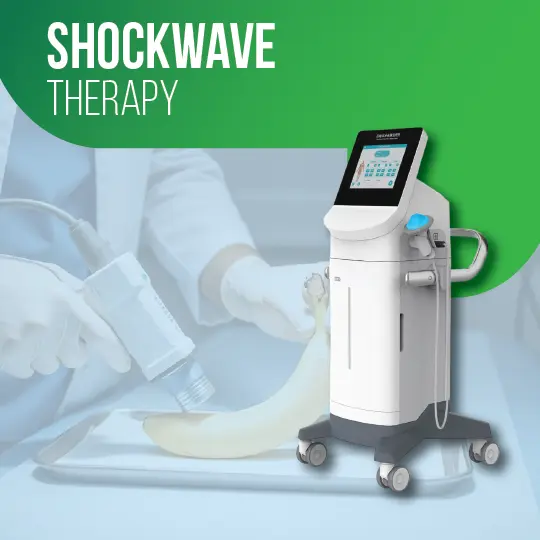
Shockwave Therapy
Shockwave Therapy – Effective Healing & Pain ReliefShockwave therapy, also known as extracorporeal shockwave therapy (ESWT), is a non-invasive medical treatment that uses sound waves to stimulate the body’s natural healing process by improving blood circulation, breaking down calcifications, reducing pain, and promoting tissue regeneration. It is commonly used to treat musculoskeletal conditions like plantar fasciitis, tennis elbow, shoulder pain, back pain, and sports injuries, as well as erectile dysfunction. Dot Clinics, located in Multan and Lahore, provides shockwave therapy treatment across Pakistan under the supervision of experienced doctors. Book your consultation today.
What is Shockwave Therapy?
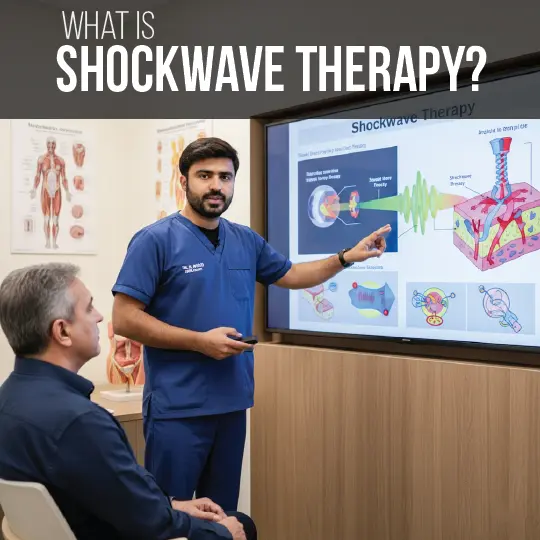
Shockwave therapy is a non-surgical treatment. It used high-energy sound waves to stimulate satisfactory healing in damaged tissue. It can help to break down the calcium deposit and improve blood flow. It plays a vital role in reducing pain for chronic diseases like tendinitis ( tennis elbow and Achilles) and plantar fasciitis, acting as an alternative to surgery by promoting tissue regeneration.
High-intensity sound waves are used in shockwave therapy, an advanced treatment for chronic conditions. This FDA-approved treatment enhances general muscular function and aids in the healing of chronic injuries. Most specialist urologists prescribe shockwave therapy for male health issues; it is not FDA-approved for treating erectile dysfunction. These sound waves work effectively to stimulate the body's natural healing process in injured tissues.
Additionally, it is used for patients with erectile dysfunction and to enhance male sexual performance. It plays a crucial role in enhancing blood flow and dissolving calcium deposits. It helps reduce the pain associated with these chronic conditions. These problems include tendinopathies, plantar fasciitis, and tendonitis (tennis elbow, Achilles).
Types of Shockwave Therapy
Shockwave therapy is categorized into two major types that can help to encourage blood flow. All types play their vital role and have different characteristics for certain biomedical applications. These mechanisms depend on focused and radial shockwaves. These therapies help to handle various diseases by stimulating tissue repair. It promotes the healing process and boosts the blood flow.
Radial therapy rolls energy outward from the surface, manages the border, and treats superficial issues like muscle pain. Its depth is 3cm. This therapy is more uncomfortable. The focused shockwave therapy pays attention to high energy accurately. Its depth is more than 12cm. It targets deep tendons and bone cases. Normally, this therapy is less painful and more powerful for complicated issues. These types are briefly described below:
Radial Shockwave Therapy
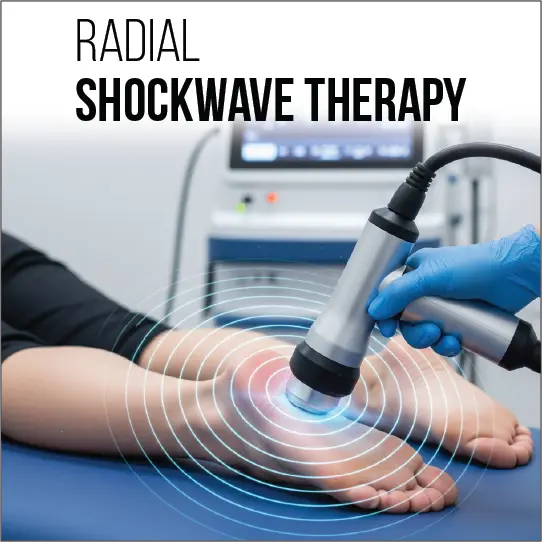
Radial shockwave therapy (RSWAT) originates a broad-focused shockwave. This radiates exposure in a 360-degree radius. RSWT waves are applied to a large surface area, rather than a single point that can be focused. This therapy allows a huge area of the damaged tissues. The explosion caused microtrauma to the affected part of the body.
It stimulates the body's pleasant healing response. This is a less invasive therapy because this therapy does not need any anesthesia and requires no target point for treatment.
What Condtions Low-Energy Radial Shockwave Therapy is Used?
- Chronic tendinopathies such as Achilles tendinitis and tennis elbow
- Plantar fasciitis
- Bursitis
- Chronic pain conditions
- Soft injuries
Focused Shockwave Therapy
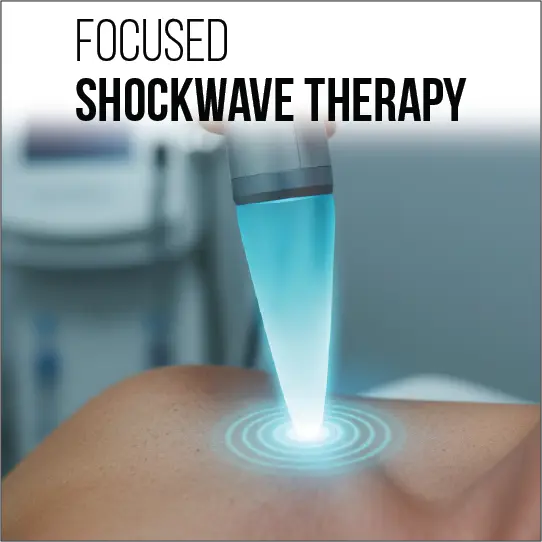
FSWT is used to focus these waves directly at the required point. These waves are allowed to use electrohydraulic, electromagnetic, and piezoelectric theory. These focused waves used geometrical lenses to concentrate the energy at a small focal area. This method exploits the high energy intensity that can extend deeper tissue levels.
The shockwave helps to promote healing through mechanotransduction. It can break the scar tissue. This therapy is mainly used for chronic diseases like plantar fasciitis, delayed bone healing, and chronic tendinopathy (tennis elbow). Anesthesia is required due to high sound waves.
What Condtions High-Energy Focused Shockwave Therapy is Used?
- treated for a kidney stone
- Non-union fractures
- Severe tendinopathies such as calcific shoulder tendinitis
- Bone healing, including delayed union or non-union fractures.
- Spasticity management in neurological disorders.
How does This Therapy Work?
Understanding the fundamental mechanisms of shockwave therapy can provide insight into how this treatment modality produces its beneficial effects. In these steps, you will understand how shockwave therapy works.
- Mechanical Simulation: Shock waves create mechanical stress and tiny microtrauma in the tissue, triggering a cascade of biological healing responses.
- Neovascularization: Therapy promotes the formation of new blood vessels, improving blood flow, oxygen supply, and nutrient delivery to aid healing.
- Tissue Regeneration: Stimulates growth factor production, enhancing collagen synthesis and tissue remodeling for faster recovery.
- Pain Reduction: Reduces pain by stimulating nerve fibers, disrupting pain pathways, and decreasing inflammation in the treated area.
- Breakdown of Calcification: Helps dissolve mineral deposits in conditions like calcific tendinitis, allowing the body to absorb and remove them naturally.
What does Shockwave Therapy Treat?
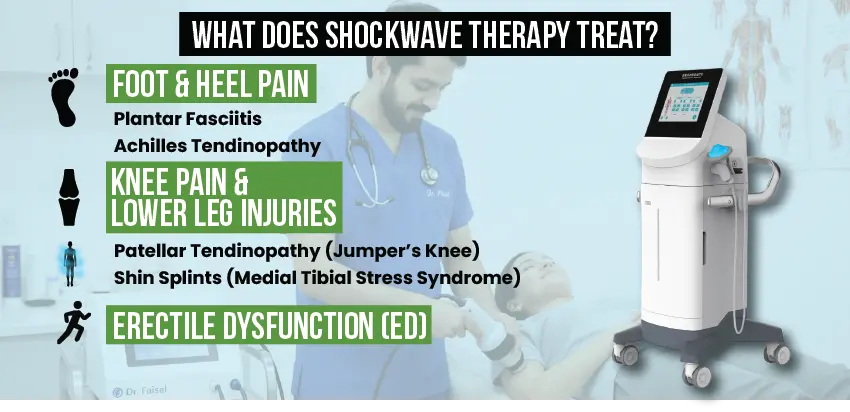
Shockwave therapy plays an important role in treating stubborn musculoskeletal injuries. This can mark acute and chronic pain. When traditional treatments have failed.
The most common conditions where shockwave therapy has shown strong results there are following:
- Foot and Heel Pain: Pain in the foot or heel can make walking uncomfortable. Common reasons for shockwave therapy include plantar fasciitis and Achilles tendinopathy.
- Plantar Fasciitis: Inflammation of the tissue along the bottom of the foot causes stabbing heel pain, especially in the morning or after long periods of standing. Shockwave therapy improves blood flow, promotes tissue regeneration, and reduces stiffness.
- Achilles Tendinopathy: Common in runners or people who spend long hours on their feet. Repeated stress can cause small tendon tears, swelling, and pain. Therapy stimulates collagen production and supports effective healing.
- Knee Pain and Lower-Leg Injuries: The knee takes constant load, which can lead to conditions such as:
- Patellar Tendinopathy (Jumper’s Knee): Pain below the knee, often seen in athletes. Therapy encourages tendon regeneration and reduces inflammation.
- Shin Splints (Medial Tibial Stress Syndrome): Caused by repeated impact. Shockwave therapy improves blood flow, supports bone remodeling, and reduces discomfort.
- Erectile Dysfunction (ED): Shockwave therapy may be safe for ED, but current evidence shows only limited improvement in many cases.
- Shoulder and Arm Pain: Shoulder injuries can significantly affect daily activities. Shockwave therapy helps reduce pain and restore movement in conditions such as:
- Rotator Cuff Tendinopathy: Stimulates tissue repair in overused or partially torn tendons.
- Calcific Tendonitis: Helps break down calcium deposits, improving mobility and reducing pain.
- Tennis Elbow (Lateral Epicondylitis): Overuse-related elbow pain where therapy promotes tissue regeneration and improves grip strength.
- Back Pain and Muscle Disorders: Helps relieve chronic muscle tightness and trigger points by improving circulation and reducing nerve sensitivity, especially for soft tissue–related low back pain.
- Sports and Overuse Injuries: Useful for athletes recovering from repetitive strain injuries, including:
- Runner’s Knee
- Hamstring Strains
- Iliotibial Band (IT) Pain
- Golfer’s Elbow
- Shin or Calf Tightness After Training
- Non-Invasive Treatment: Allows athletes to continue light activity during recovery without long downtime.
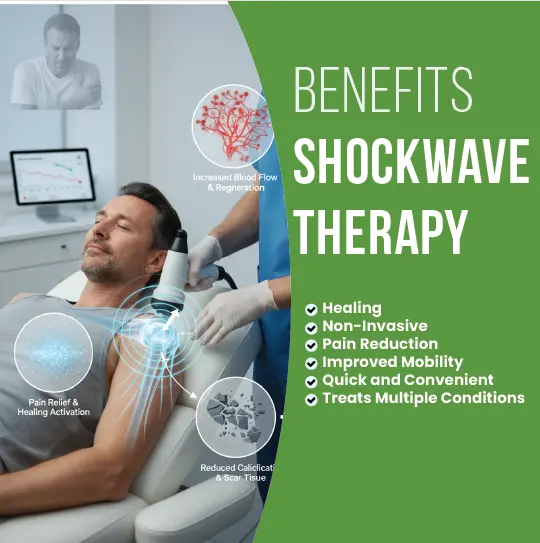
Shockwave Therapy Benefits
Shockwave therapy advantages include improving mobility for musculoskeletal issues. This therapy is used to reduce chronic pain and promote natural healing. It helps stimulate blood flow, collagen production, and tissue regeneration through faster, non-invasive treatment with minimal side effects.
- Healing: Sound waves improve blood flow, boost collagen production, and activate cells, supporting faster tissue repair and regeneration.
- Pain Reduction: Helps reduce pain by overstimulating nerve endings and breaking down hardened tissue in tendons.
- Reduces Chronic Inflammation: Activates mast cells and helps reverse long-standing inflammation.
- Quick and Convenient: Each session takes only 5–10 minutes, allowing a fast return to daily activities.
- Treats Multiple Conditions: Effective for plantar fasciitis, hip bursitis, shoulder pain, stress fractures, and similar conditions.
- Non-Invasive: A safe treatment with no surgery, no injections, and minimal risk of complications.
- Improved Mobility: Reduces stiffness and improves flexibility in the treated area.
Shockwave Therapy Side Effects
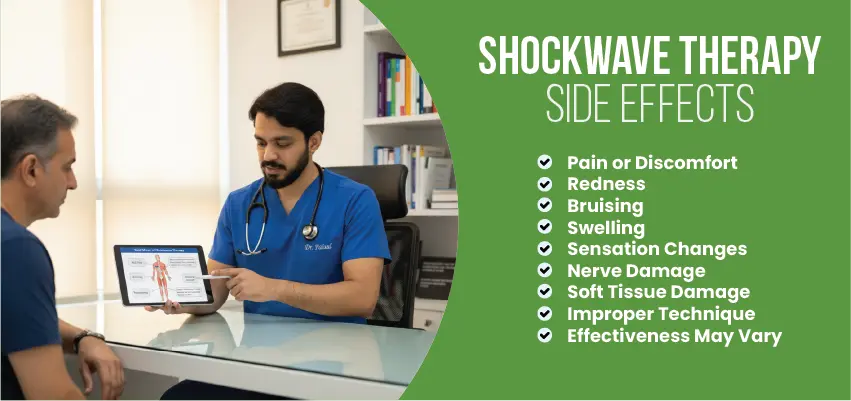
Shock wave therapy is generally safe with common and minor side effects like redness, swelling, tingling at the site, and irritation. These common side effects are described in detail:
- Pain or Discomfort: Mild soreness during or after therapy, usually resolving within 60 minutes to one day.
- Redness: Temporary redness may appear on the treated area after the session.
- Bruising: Minor bruising can occur during or shortly after treatment.
- Swelling: Mild swelling may develop at the treated site but typically subsides within a day.
- Sensation Changes: Tingling or unusual sensations may be felt during shockwave therapy.
- Nerve Damage: A potential risk, especially with improper technique or in patients with existing nerve conditions such as neuropathy.
- Soft Tissue Damage: Very rare cases may include hematoma or soft tissue injury.
- Improper Technique: Risks increase if the therapist is unqualified or uses incorrect methods.
- Effectiveness May Vary: Results can differ based on the condition being treated; evidence is less clear for some uses, such as erectile dysfunction.
Who is the Best Candidate for Shockwave Therapy?
The people who suffer from chronic, stubborn pain, like tennis elbow and tendonitis, are the best candidates for the shock wave theory. The ideal patients often have a specific localized issue where therapy can kickstart healing, and require a professional assessment to confirm suitability.
- ✅ Chronic Tendon Issues: Suitable for people with Achilles tendonitis, tennis elbow, golfer’s elbow, jumper’s knee, and rotator cuff tendonitis.
- ✅ Soft Tissue and Bone Injuries: Helps manage certain types of arthritis, shin splints, musculoskeletal pain, and stress fractures.
- ✅ Specific ED Cases: May benefit men with mild to moderate ED who do not respond well to oral medications, including post-prostatectomy patients.
- ✅ Active Individuals: Ideal for athletes and active people looking to speed up injury recovery and improve performance readiness.
How do I prepare for ShockWave Therapy?
Before taking the shockwave therapy treatment, it is necessary to consider the following factors:
- Consultation with Therapist: Meet with a certified healthcare professional who will assess your condition and determine whether you are a suitable candidate for shockwave therapy.
- Medical History: Discuss your complete medical history with your doctor, including existing medical conditions, previous injuries, and any past surgeries.
- Side Effects: Review possible temporary side effects of shockwave therapy. Although uncommon, mild redness, swelling, or discomfort may occur.
- Pre-Treatment Instructions: Carefully follow all instructions provided by your healthcare provider, including guidance on medications and activities to avoid before treatment.
- Post-Treatment Instructions: Adhere to post-treatment guidelines from your therapist, which may include temporary changes to daily activities or exercise routines.
- Communication: Maintain open communication with your doctor throughout the treatment process. Ask questions, share concerns, and provide feedback on your progress.
Who Should Avoid Shockwave Therapy
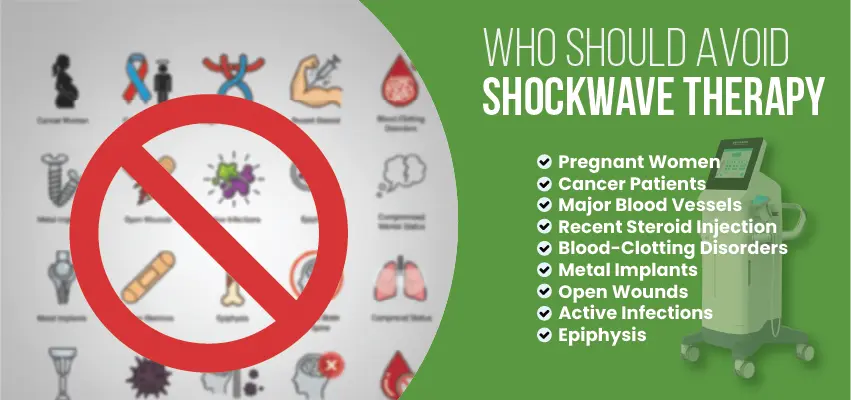
This type of treatment is not for everyone; the people who can't take these treatments are below there:
- Pregnant Women: Shockwave therapy is not recommended during pregnancy.
- Cancer Patients: Should not be used on cancer patients or over cancerous tissues.
- Major Blood Vessels: Therapy should never be applied directly over major blood vessels.
- Recent Steroid Injection: Treatment should be avoided shortly after a steroid injection.
- Blood-Clotting Disorders: Not suitable for patients with bleeding disorders or those taking blood-thinning medications.
- Metal Implants: Avoid treatment near metal implants in the targeted area.
- Open Wounds: Therapy should not be applied over open wounds.
- Active Infections: Avoid use on infected tissues or areas.
- Epiphysis: Not recommended over growth plates, especially in children.
- Compromised Mental Status: Patients unable to cooperate or follow instructions should not undergo treatment.
- Joint Replacement: Avoid application near joint replacement implants.
- Malignant Tumors: Must not be used on malignant or neoplastic tissues.
- Near the Brain or Spine: Therapy should not be applied close to the brain or spinal structures.
- Near the Lungs: Avoid treatment near lung tissue due to safety concerns.
- Bleeding Issues: Patients with any type of active bleeding condition should not receive this therapy.
What is the Cost of Shockwave Therapy?
In Pakistan, shockwave therapy depends on the condition, like erectile dysfunction (ED) and kidney stones ( ESWL). It also depends on the clinic's reputation, the surgeon's qualifications, and the city.
Normally, radials are cheap, and focus is more expensive. The total package for erectile dysfunction often costs 20,000 PKR to 250,000 PKR for multiple sessions. For kidney stone treatment, the session can be PKR 35,000 to PKR 90,000.
At Dot. clinic, we charge PKR 8,000 per session. Our equipment is state-of-the-art. We use the world's best shockwave technology rather than countertop machines, which typically deliver little to no results.
How Long Does Shockwave Therapy Take to Work?
The patient always asks about this therapy, like how long does shockwave therapy last?
Firstly, they might experience instant relief. This is because the number in the nerve. However, the results appear in 5-11 weeks after treatment. The result of this therapy is long-term. The patient may experience a pain reduction that may exist for months, even if it takes a year. The time period of this recovery totally depends on the patient's body.
Is ShockWave Therapy Painful?
Shock wave therapy can be uncomfortable, but it can be bearable. However, the amount of energy used is determined by the client's tolerance level. This therapy should never reach an intolerable level of discomfort. In normal consent among professions that use this therapy in practice. The pain should never go above 5/10 on the pain scale. The physiotherapy session lasts between 15 and 20 minutes. This therapy is an innovative treatment rapidly growing due to its effectiveness in treating various injuries. Here is what makes it such an effective treatment.
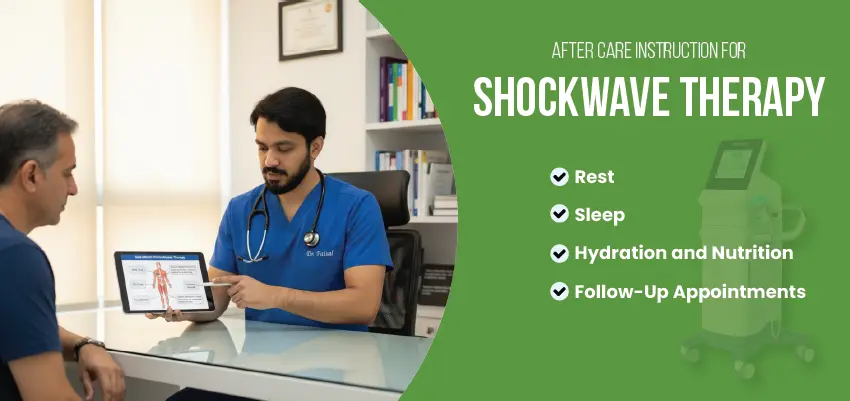
AfterCare Instruction for ShockWave Therapy
Shock wave therapy can be uncomfortable, but it can be bearable. However, the amount of energy used is determined by the client's tolerance level. This therapy should never reach an intolerable level of discomfort. In normal consent among professions that use this therapy in practice. The pain should never go above 5/10 on the pain scale. The physiotherapy session lasts between 15 and 20 minutes. This therapy is an innovative treatment rapidly growing due to its effectiveness in treating various injuries. Here is what makes it such an effective treatment.
- Rest: Allow the treated area to rest and recover by avoiding heavy exercise for at least 48 hours after treatment.
- Hydration and Nutrition: Stay well hydrated and follow a balanced diet rich in protein, fruits, and green vegetables to support tissue repair.
- Sleep: Aim for 8–9 hours of sleep each night to support proper healing.
- Follow-Up Appointments: Attend all scheduled follow-up visits to monitor progress and address any concerns.
When to Seek Medical Attention
- Severe Pain: Increasing or persistent pain despite following aftercare instructions.
- Swelling and Bruising: Excessive swelling or bruising that does not improve with standard care.
- Signs of Infection: Redness, warmth, discharge, or worsening symptoms at the treated area.
Why Dot Clinics Is a Top Choice for Shockwave Therapy?
If you are finding an effective solution for erectile dysfunction, chronic pain, and injuries, selecting the right provider is essential. People choose Dot Clinics for shockwave therapy in Lahore and Multan because our certified practitioners are highly experienced and provide personalized care.

This clinic emphasizes a professional and confidential environment for patients, using advanced treatment techniques to ensure the best possible results with shockwave therapy.
- Expert Care: Led by Dr. Amjad and Dr. Faisal Ilyas, who have a strong background in administering shockwave therapy safely and accurately.
- State-of-the-Art Technology: Advanced shockwave therapy equipment is used for optimal outcomes.
- Customized Treatment Plans: Each patient receives an individualized treatment approach depending on their condition and goals.
- Focus on Long-Lasting Results: Our aim is to help patients regain confidence, function, and reduce pain using non-invasive, research-based techniques.
- Affordable Prices: We offer affordable costs for high-quality shockwave therapy sessions compared to typical clinic rates.
- Patient Guidance and Ongoing Support: Our healthcare specialists and professional team provide clear guidance, regular progress tracking, and open communication to help patients stay informed.
Yuan, J., et al. (2025). Efficacy of extracorporeal shock wave therapy for erectile dysfunction: A systematic review and meta-analysis (https://link.springer.com/article/10.1186/s12610-025-00258-1). Basic and Clinical Andrology, 35, Article 12.

Dr. Amjad
Urologist & Endoscopic Surgeon
The content of this page is for informational purposes only.
Please consult with our Urologist & Endoscopic Surgeon for diagnosis and ED treatment.
Meet Our Medical Providers




Our Contacts
-
LAHORE: 85-R1, Johar Town, Phase 2.
MULTAN: 2nd Floor Ali Imran Center, Opposite UBL, Abdali Road.
Get Lahore Directions
Get Multan Directions -
Lahore: 0327-0011336 , 0329-0011336
Multan: 0332-1133577, 0327-0011335
(24/7 General inquiry) - info@dotclinics.pk
Why DotClinics?
Highly qualified medical team, latest treatments with state of the art technology to fix your skin, hair & body issues.
Patient centric clinic.