Venous Leak Treatment
Advanced Treatment of Penile Venous Leak by a Experienced UrologistVenous leak (veno-occlusive dysfunction) is a physical condition where penile veins fail to retain blood during an erection, causing erectile dysfunction. It can be treated with embolization, Botox injections, shockwave therapy, the P-Shot, or surgery at Dot Clinics in Lahore and Multan. We primarily focus on treating the root cause to provide durable, drug-free, and surgery-free results with quick recovery.
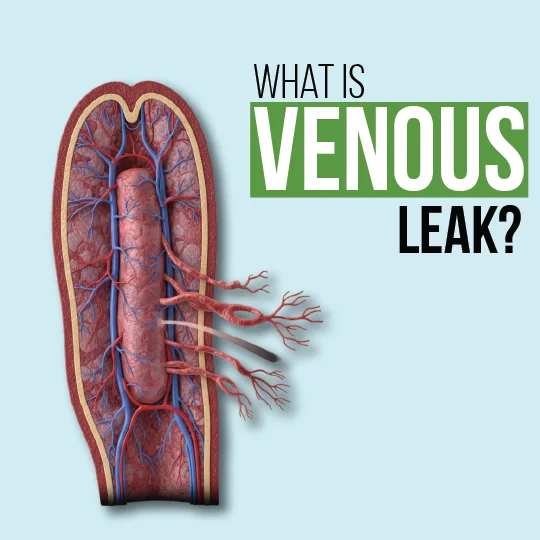
What is Venous Leak?
Venous leak (veno-occlusive dysfunction), as the name suggests, refers to a condition in which blood is unable to stay within the veins and drains out too quickly. In simpler terms, it is the inability of veins to retain blood, leading to early drainage or “leakage” of blood. This condition is also known as veno-occlusive insufficiency or venogenic erectile dysfunction.
How Does a Normal Erection Occur?
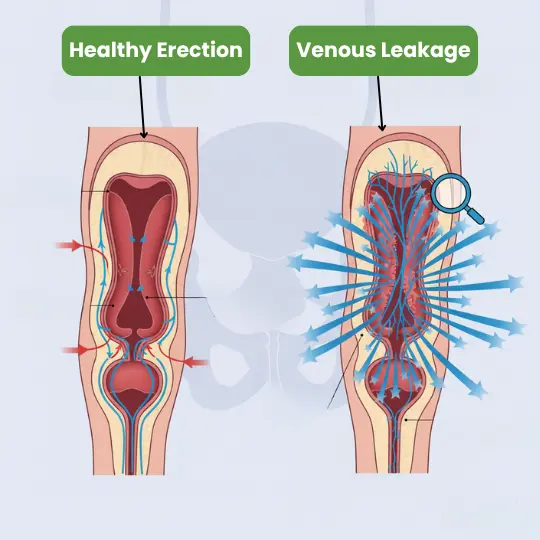
To understand Venous Leak better, let’s first look at how a normal erection occurs. During a normal erection, blood flows into the corporal bodies (corpora cavernosa of the penis, filling them and causing rigidity. The erection is maintained as long as the blood stays trapped within these chambers. However, in venous leak, the veins fail to retain the blood properly, allowing it to drain out too quickly. As a result, the erection either fails to sustain or drops soon after it begins.
Patients with venous leak usually complain that they are able to achieve an erection, but it doesn’t last long. In some cases, even the initial erection is weak or incomplete, and whatever erection occurs tends to fade quickly.
How Fix Venogenic Erectile Dysfunction?
If you suspect venous leakage, consult a healthcare professional or a sexual medicine specialist for proper diagnosis and treatment. According to Dr. Amjad, our urologist at Dot Clinics, surgical procedures such as vein embolization or venous ligation surgery are the best options for a permanent cure of venous leak ED. Oral ED medications and non-surgical options like P-Shot and Shockwave therapy are also effective if the patient does not have a serious condition.
Is Venous Leak a Real Medical Condition?
Yes, venous leak is a clinically recognized condition, formally documented in international urology and sexual medicine guidelines. It is diagnosed using Colour Doppler Ultrasound, a gold-standard medical test. At Dot Clinics, we properly diagnose the patient’s condition and provide advanced non-surgical and surgical personalized solutions according to the patient’s condition.
How Common is Venous Leak ED by Age?
Venous leak ED can occur in men of all ages, but its frequency varies by age group. Studies suggest that among men below 45 years of age, approximately 12% may experience venous leak. In men older than 45 years, the frequency increases to around 20%. Thus, the condition becomes more common with increasing age, although younger patients are not immune to it.
Does Venous Leak happen suddenly?
Venous leak usually develops gradually rather than suddenly. It occurs when the veins in the penis cannot trap blood properly during an erection, often due to aging, diabetes, high blood pressure, nerve injury, or hormonal issues. Men may first notice that their erections are less firm or difficult to maintain, and over time, this problem becomes more consistent. In some cases, it may feel sudden if a triggering event like pelvic injury, surgery, or severe stress worsens the condition quickly, but the underlying issue is typically present long before symptoms become noticeable. Early detection and treatment are important to prevent further progression.
Venous Leak Symptoms
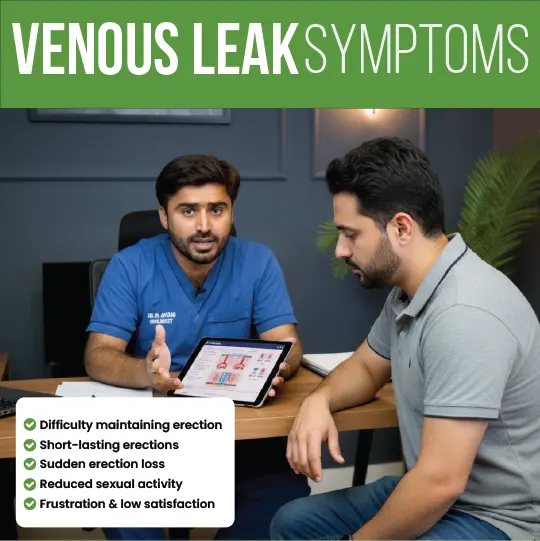
A common sign of venous leak is that an erection can happen, but it does not stay for long—it becomes weak quickly, usually within 60–90 seconds, even with continued stimulation. If medicines like Viagra do not work well or give very little result, it may be a sign of venous leak instead of stress-related (psychological) erectile dysfunction. Common symptoms include:
- Trouble in keeping an erection sufficient for sexual intercourse.
- Erections that are shorter than usual.
- Sudden loss of erection during sexual encounter.
- Reduced frequency of sexual activity due to performance concerns.
- Feelings of frustration and decreased sex life satisfaction.
- Normal Morning Erections May Be Absent
- Some men may struggle to get an erection at all.
- Sometimes linked with underlying conditions like diabetes or Peyronie’s disease.
Identifying venous leak early helps prevent long-term quality of life issues. If you notice these symptoms, especially in conjunction with other medical conditions such as testosterone levels deficiency or vascular problems, then prefer to consult about venous leak therapy at Dot Clinics to resolve the issue timely.
What Causes Venous Leakage?
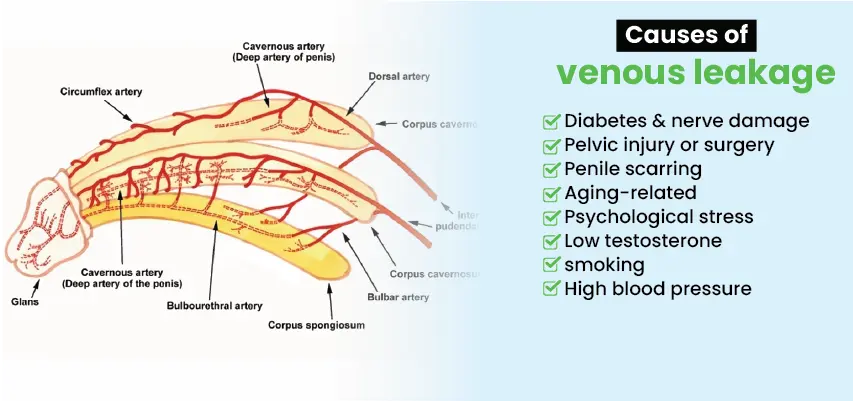
Venous Leak is caused by structural damage to penile smooth muscle/veins, hormonal imbalances (low testosterone), trauma, Peyronie's disease, or chronic conditions like diabetes. Several factors contribute to vascular leakage including:
- Damage or malfunction of the penile veins causing problematic veins.
- Vascular disease or aging-related weakening of blood vessels.
- Hormonal issues such as testosterone deficiency.
- Long-term diabetes can damage blood vessels and nerves, making it difficult for the veins to properly hold blood inside the penis during an erection.
- Smoking weakens blood vessels and reduces blood flow, which can affect the veins’ ability to trap blood and maintain an erection.
- Lifestyle elements include smoking, obesity, and sedentary habits.
- Trauma or surgery affecting penile tissue and veins.
Does Masturbation Cause Venous Leak?
While normal masturbation does not cause venous leak, very frequent or aggressive masturbation (especially using tight grip or unusual techniques) may lead to pelvic muscle strain or minor injury. This can create symptoms similar to venous leak, such as difficulty maintaining an erection.

How is Venous Leak Diagnosed at Dot Clinics?
The primary diagnostic test for venous leak is Color Doppler Ultrasound of the Penis. This non-invasive imaging test evaluates the arterial and venous blood flow in detail. It helps determine whether the blood is flowing and staying within the corporal chambers adequately, how long it remains there, and whether there is abnormal drainage. It also measures pressure within the penile chambers to confirm the presence of a venous leak.
At Dot Clinics, we use a combination of your medical history and diagnostic tests to detect venous insufficiency:
- We perform physical examinations to check the structure and function of the penis.
- Doppler Ultrasound is used to evaluate blood flow and detect vascular leakage.
- A nocturnal penile tumescence test helps determine if the cause is physical or psychological.
- Diagnostic intracavernosal injections are given to observe erection response and blood retention.
- Overall medical conditions are reviewed to rule out other possible causes.
This thorough approach ensures right diagnosis of venous leak without unnecessary complexity.
Is Venous Leak Permanent? Can It Heal on Its Own?
Venous leak is not always permanent, but it usually does not heal completely on its own, especially if it is caused by blood vessel damage, aging, or conditions like diabetes. If someone is facing stress, overuse, or temporary weakness of pelvic muscles, natural recovery is possible by adopting a better lifestyle and healthy diet. If you have a serious condition, you must consult a urologist to properly treat it.
Can Low Testosterone Cause Venous Leak?
Low testosterone does not directly cause venous leak, because testosterone plays a role in maintaining healthy blood vessels and circulation in the penis. Although low testosterone levels can cause some venous insufficiency that cuase poor erection.
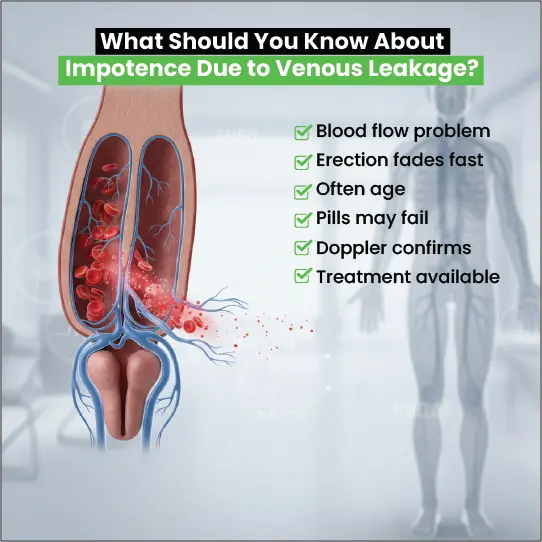
Why does Venogenic ED Cause Impotence?
Venous leak, also known as venogenic erectile dysfunction, is a disorder that occurs when the penile veins fail to retain blood, preventing the accumulation of sufficient blood in the penis to achieve a firm erection. There are two types of venous leakage.
Key points you should know:
- It is a blood flow problem, not a hormone or desire-related issue.
- Erections may start normally but fade quickly.
- It is commonly linked to aging, diabetes, pelvic injury, surgery, or long-standing erectile dysfunction.
- Medications such as sildenafil may be less effective in severe cases.
- Diagnosis often involves a penile Doppler ultrasound.
- Treatment depends on severity and may include medications, injections, vacuum devices, or penile implants.
Venous leakage is a physical condition which can be cure by effective treatment options available at Dot Clinics. Proper evaluation by a urology specialist is essential. With appropriate treatment, erectile function can be restored, allowing patients to resume a fulfilling sex life.
What Treatment Options are Available for Penile Venous leak?
Dot Clinics knows how much your quality of life depends on sexual health. So, we provide a whole range of effective treatments including natural, medical, and surgical choices designed to successfully and confidently address vein leakage. Dot Clinics offers the following promising treatments:

Non-Surgical Treatment Options for Venous Leak
- P-shot (Priapus Shot):
PShot is a latest technique which uses your own platelet-rich plasma (PRP) and then injected into the penis to foster recovery and tissue replacement. It enhances sensitivity, boosts blood vessel function, and improves rigidity by promoting new vascular structures and repairing impaired erectile tissue. - Shockwave therapy:
Low-intensity acoustic Shockwave Therapy is delivered to the penile tissue in a non-invasive and pain-free manner. These waves increase the formation of angiogenesis, or new blood vessels, so improve blood flow and naturally cure vascular damage and vein leakage.For venous leak, shockwave therapy helps increase nitric oxide and encourages new healthy blood vessels to grow, which strengthens the vein walls. A usual treatment plan is 6–12 sessions over 6–12 weeks, with noticeable improvement starting from the 3rd or 4th session. - HIFEM (High-Intensity Focused Electromagnetic) Therapy:
Exclusive at Dot Clinics, HIFEM therapy helps erectile function by strengthening deep pelvic floor muscles. It improves blood trapping in the penis and helps lower vein leakage. It yields optimal results when used with Shockwave or the P-Shot. - Trimix Injections:
Intracavernosal injections deliver medicine (like Trimix) straight into the penile tissue, therefore creating strong arterial inflow and mechanically trapping blood in the corpora cavernosa, hence treating venous leakage. This generates pressure that maintains blood even when venous outflow is compromised, hence counteracting the leakage. Trimix combines Alprostadil, Papaverine, and Phentolamine. Available at Dot Clinics under medical supervision. - Vacuum Erection Device (VED):
At Dot Clinics, we provide expert guidance on using VEDs, which generate erections by gently pulling blood into the penis via suction. A constriction ring is then placed at the base to maintain the erection by preventing blood from leaking out, making it especially effective for managing venous leakage and supporting natural function. - Medications:
Venous leakage can also be treated in the initial stage with certain medications, such as PDE5 inhibitors (Viagra, Cialis, Levitra) or intracavernosal injections (Alprostadil). Phlebotonics (vein-strengthening supplements) may be prescribed as a supportive measure in early-stage venous insufficiency. However, these medications should only be taken after evaluation by a urologist and strictly as prescribed by a doctor. - Penile Implant Surgery for Venous Leakage: For patients with unexplained venous leakage due to trauma, a penile implant appears to most effective, long-lasting solution for men suffering from severe penile venous insufficiency. If simpler treatment methods fail, then penile prosthesis surgery becomes more reliable procedure. The implantation contains mechanical devices inserted into the socrotun and in the penis, enabling a firm erection to be achieved on demand, without depending on blood flow. However, its disadvantages include high cost and irreversibility, which should be explained to the patient. Unless there are special conditions, three-piece inflatable penile implants are generally preferred, as with other penile prosthesis cases.
- Venous Ligation Surgery:
A targeted surgical technique that identifies and seals leaking veins causing inadequate blood retention in the penis. The surgery helps restore the natural capacity to trap blood during an erection by blocking these abnormal veins, therefore enhancing firmness and duration. It is normally reserved for situations when less invasive methods have failed. Success rates for venous ligation surgery range from 50–80% in appropriately selected patients. - Venous Leak Embolization:
Dot Clinics also provides interventional radiology (IR) embolization, a minimally invasive procedure where leaking veins are selectively blocked using medical agents. During venous leak embolization, a doctor inserts a small tube into a vein and blocks the leaking veins to improve blood flow to the penis. The procedure has a success rate of 60–80%, with many men noticing stronger erections after treatment. Venous leak embolization can be long-lasting, but results may vary depending on the patient’s condition. Recovery is usually quick, with most men resuming normal activities within a few days.
Permanent Cure for Venous Leak with Surgery Options
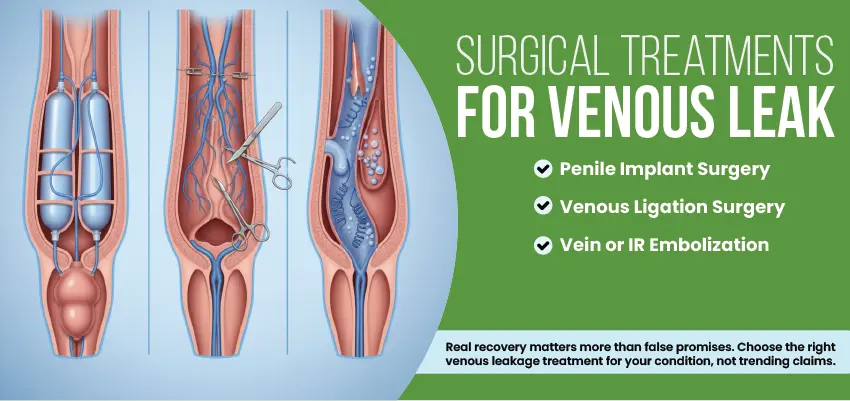
At the Dot Clinics Lahore and Multan, we offer a range of treatment options for male impotance to help you return to a normal, and satisfying sex life. Your preferences, overall health and the factors specific to your condtion are taken into consideration to guarantee that you receive the care most suited to your individual needs.
Can venous Leak be Cured Naturally?
Venous leaks usually cannot be fully cured naturally, but lifestyle changes like regular exercise, a healthy diet, quitting smoking, and pelvic floor exercises may improve symptoms and overall erectile function. Most cases still require medical or surgical treatment for a lasting solution. Many studies show that if patitents follow best lifestyle changes, they will get the best results.
Healthy Lifestyle Habits:- Regular exercise: Aerobic activities (walking, jogging, swimming) improve blood flow; pelvic floor exercises strengthen muscles supporting erections.
- Maintain healthy weight: Reduces stress on blood vessels and improves vascular function.
- Limit alcohol & tobacco: Both negatively affect circulation and vascular health.
- Heart-healthy foods: Fruits, vegetables, whole grains, lean proteins; omega-3 rich foods like salmon, mackerel, flaxseeds, and walnuts.
- Fiber-rich foods: Whole grains (bread, oats, barley, rye) prevent constipation, which can worsen venous leaks.
- Fruits & vegetables: Pears, berries, melon, oranges, potatoes, broccoli, carrots, sweet corn support overall health.
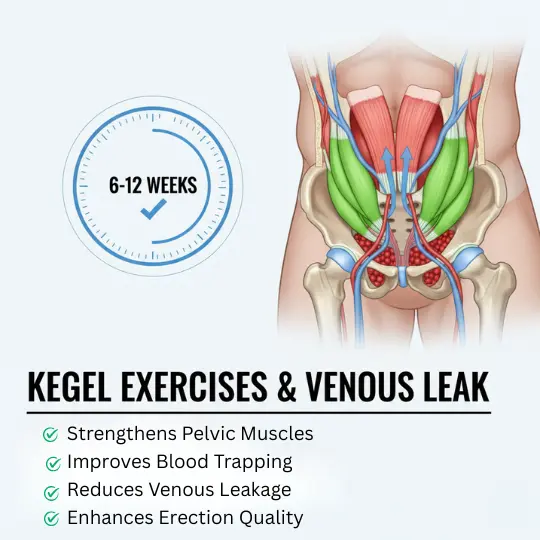
Can Kegel Exercises Cure Venous Leak?
Kegel exercises can improve venous leak symptoms in mild cases, but they cannot fully cure the condition on their own. These exercises strengthen the pelvic floor muscles, especially the ischiocavernosus and bulbocavernosus muscles which play a direct role in trapping blood inside the penis during an erection. When these muscles become stronger, they compress the penile veins more effectively, which helps reduce blood leakage and improves erection firmness and duration.
Research supports this. In one clinical study, men who followed a structured pelvic floor training programme showed results comparable to surgical venous ligation, and 42% were satisfied enough to refuse surgery altogether. However, this benefit is mainly seen in men with mild to moderate venous leak caused by muscle weakness rather than actual vein or blood vessel damage.
If your venous leak is caused by diabetes, vascular disease, aging, or physical injury to the penile tissue, Kegel exercises alone will not be enough. In such cases, advanced treatments like Shockwave Therapy, P-Shot, HIFEM Therapy, or surgical options such as venous ligation and embolization are needed for a lasting result. At Dot Clinics, our experienced urologists first diagnose the root cause of your condition and then recommend the most suitable treatment, so you get results that are real, durable, and right for your specific case.
Venous Leak Specialist at Dot Clinics
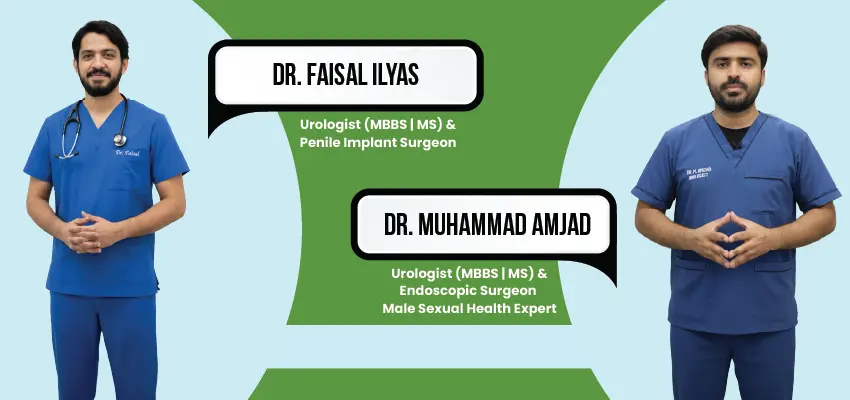
Dr. Amjad and Dr. Ilyas are interventional radiologists and endovascular surgeons at Dot Clinics, providing permanent treatment for venous leakage issues. They have been practicing in their fields for many years and are experts in diagnosing and treating venous leak. They also specialize in treating other causes of erectile dysfunction. They have successfully treated many patients with venous leak symptoms and have a proven record of satisfactory results. Dr. Faisal Ilyas is also highly experienced in penile implant surgery. We provide our services across Pakistan.
Venous Leak Treatment Cost in Pakistan
In Pakistan, the cost of venous leak treatment varies widely depending on the type of treatment, clinic, and city. Specialist consultations typically range from PKR 1,000 to PKR 5,000, while diagnostic tests like penile Doppler can cost PKR 15,000 to PKR 25,000. Non-surgical venous leak treatments start from as low as PKR 20,000 and can go up to PKR 100,000.
Surgical venous leak treatments include venous ligation, which costs PKR 150,000 to PKR 300,000, and penile implants, which range from PKR 700,000 to PKR 1,200,000. Prices vary by clinic, city, and case complexity.
Venous Leak Embolization Cost in Pakistan
Venous leak embolization typically costs PKR 400,000 to PKR 700,000 in private hospitals, while public hospitals may charge less (around PKR 200,000 to PKR 400,000) depending on the facility, city, and doctor’s expertise.Dot Clinics offers both surgical and non-surgical treatment in Lahore and Multan, with a doctor consultation fee of PKR 1,500. Final treatment price is decided after knowing about the patitent conditions.
Venous Leak Treatment Near Me
Searching for venous leak treatment near me to achieve stronger erections for sexual intercourse? Dot Clinics offers specialized ED venous leak therapies in Multan (Main Abdali Road) and Lahore (Johar Town), including P-Shot or Shockwave Therapy. Get reliable, minimally invasive treatment near your area.
Why Choose Dot Clinics For Venous Leak Treatment?
We combine advanced diagnostic tools with a thorough medical history review to accurately identify the cause of your venous leak and design the best treatment plan. Your path to recover sexual health with erectile dysfunction treatment is assisted every step of the way including focusing on raising your quality of life, sexual confidence and satisfaction. Your privacy comes first at Dot Clinics. We follow rigorous confidentiality rules to guarantee your personal information and treatment specifics stay totally safe and private.
At DOT Clinics, we have Dr. Muhammad Amjad (M.B.B.S/M.D – Latin America, MS Urology, Pakistan Medical Commission Certified), a renowned Urologist and Endoscopic Surgeon. He is also recognized as one of the best sexologists, specializing in the diagnosis and treatment of venous leak and other sexual dysfunctions. With his expertise, he provides personalized treatment plans to help men overcome venous leakage and achieve a healthy sex life.
If you are experiencing symptoms of venous leak or any other sexual dysfunction, consult Dr. Amjad at Dot Clinics, a renowned sexologist in Pakistan. He offers comprehensive evaluations and effective treatments. Book your consultation today and get a permanent solution for venous leakage and other causes of erectile dysfunction (ED).

Dr. Amjad
Urologist & Endoscopic Surgeon
The content of this page is for informational purposes only.
Please consult with our Urologist & Endoscopic Surgeon for diagnosis and Venous Leak treatment.
FAQ's
Lifestyle modifications including refraining from smoking, exercising, pelvic floor exercises, and contemporary non-invasive procedures help to reduce symptoms without surgery.
Low testosterone might interfere with blood flow patterns, so reducing sexual drive and exacerbating erectile quality and exposing more obvious vein leakage signs.
VEDs cause negative pressure to pull blood into the penis and keep an erection outside. They can temporarily alleviate signs but do not repair venous leak.
Indeed, regular erection concerns and intimacy loss can reduce overall quality of life, confidence and sexual satisfaction.
More usually seen in older males, it can also arise in younger men, particularly if they have risk factors such as injury, vascular illness, or poor lifestyle choices which influence vein health.
Meet Our Medical Providers




Our Contacts
-
LAHORE: 85-R1, Johar Town, Phase 2.
MULTAN: 2nd Floor Ali Imran Center, Opposite UBL, Abdali Road.
Get Lahore Directions
Get Multan Directions -
Lahore: 0327-0011336 , 0329-0011336
Multan: 0332-1133577, 0327-0011335
(24/7 General inquiry) - info@dotclinics.pk
Why DotClinics?
Highly qualified medical team, latest treatments with state of the art technology to fix your skin, hair & body issues.
Patient centric clinic.