Varicocele (Male Infertility)
Treatment Performed by Qualified Radiologist and UrologistA varicocele is an enlarged vein in the scrotum that can cause mild symptoms, pain, infertility, and low testosterone. Varicoceles are more common in males aged 15 to 25 and are most commonly found on the left side of the scrotum. The main cause of a varicocele is faulty or weakened valves in the scrotal veins that allow blood to flow backward and pool, causing the veins to enlarge. Not all varicoceles affect men’s health, but in some cases, they can lead to male infertility. There are no medical treatments that can cure varicoceles permanently; however, vein embolization and varicocelectomy (a surgical procedure) provide effective results. These treatments can help relieve pain, improve sperm quality, and enhance male fertility.
Dot Clinics offers both Varicocele Embolization and Varicocelectomy, performed by expert urologists Dr. Amjid in Multan and Dr. Faisal Ilyas in Lahore. We provide specialized care using advanced technology to permanently resolve problems related to erectile dysfunction (ED) and male infertility. At Dot Clinics, we treat every patient individually, so you can feel assured that your care is fully personalized.
What Are Varicoceles?
A varicocele is a common condition that causes enlargement of the veins in the scrotum. Veins contain one-way valves that allow blood to flow from the testicles and scrotum back to the heart. When these valves do not work properly, blood pools in the veins, causing them to enlarge.
As a result, men may experience problems such as impaired fertility, decreased testosterone production by the testes, or scrotal discomfort. An interventional radiologist can diagnose varicoceles through physical examination and ultrasound imaging.
Varicoceles are more common on the left side of the scrotum because male anatomy is not the same on both sides. Blood flow on the left side is different and under higher pressure, which is why varicoceles occur more often in the left testicle than the right. They usually do not occur on both sides.
If you feel pain or swelling, your doctor may prescribe medicines to reduce it. For discomfort or heaviness in the scrotum, wearing supportive underwear or a supporter can help you feel more comfortable in daily life.
If these treatments do not work and you still have pain or male infertility, then Varicocele Embolization (non-surgical) and Varicocelectomy (surgical) are the most effective and advanced treatment options. Both procedures are safe and provide excellent results.
Can a Man With Varicoceles Get a Woman Pregnant?
Yes, a man with varicocele can get a woman pregnant. Varicocele does not always cause infertility, and many men in Pakistan with mild or moderate varicocele have normal sperm health and are able to have children naturally. In some cases, varicocele can affect sperm count or movement, which may make pregnancy take longer, but it does not mean pregnancy is impossible. Treatments like surgery or assisted reproductive technologies (IUI/IVF) can significantly improve chances of pregnancy.
What are the first signs of varicocele?
The early signs of a Varicocele are often mild and easy to ignore. Many men feel a dull pain or heaviness in the scrotum, especially after standing for a long time, exercising, or at the end of the day. The discomfort usually improves when lying down. Some men may also notice swelling or enlarged veins above the testicle that feel like a bag of worms. In many cases, varicocele does not cause strong symptoms and may only be discovered during a medical checkup.
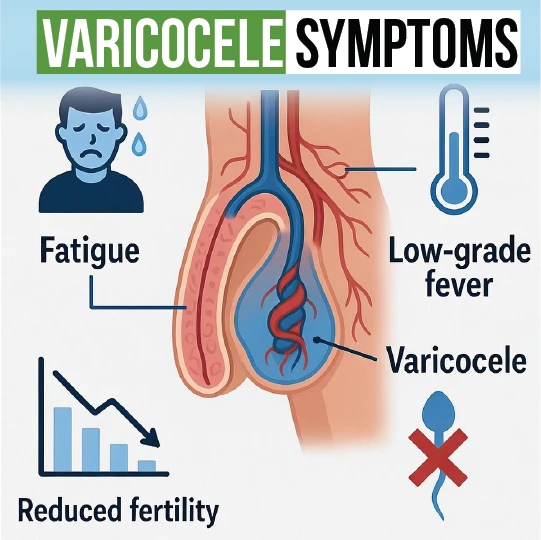
Symptoms of Varicocele in Men
Varicocele symptoms commonly include a dull, aching pain or heavy, dragging sensation in the scrotum that worsens with standing or physical activity and improves when lying down.
- A dull or aching scrotal pain particularly after long periods of standing or physical activity.
- Enlarged or visible veins in the scrotum, sometimes referred to as a "bag of worms".
- Discomfort or heaviness in the testicles.
- One testicle (typically the left one) may seem smaller than the other.
- Fertility issues or troubles during sexual activity.
- Swelling in the scrotum which gets worse as the time passes.
Varicocele Grade 4 Symptoms
Varicocele grade 4 is a severe form of varicocele, and the symptoms are usually more noticeable. Men may feel a heavy or dragging pain in the scrotum, especially after standing for a long time or doing physical work. The veins can look clearly enlarged and twisted, often described as feeling like a “bag of worms.” There may be scrotal swelling, discomfort while walking or exercising, and pain that improves when lying down. If you have this stage of Varicocele, treatment is very necessary.Does Varicoceles Cause Low Testosterone?
Yes, a Varicocele can sometimes lead to low testosterone levels. Testosterone is the main male hormone that controls energy, muscle strength, mood, and sexual health. When the veins in the scrotum become enlarged, they can increase the temperature around the testicles and reduce healthy blood flow. This may affect the cells that produce testosterone. Not every man with varicocele will have low testosterone, but larger or untreated varicoceles can increase the risk over time.
What are the Root causes of Varicoceles?
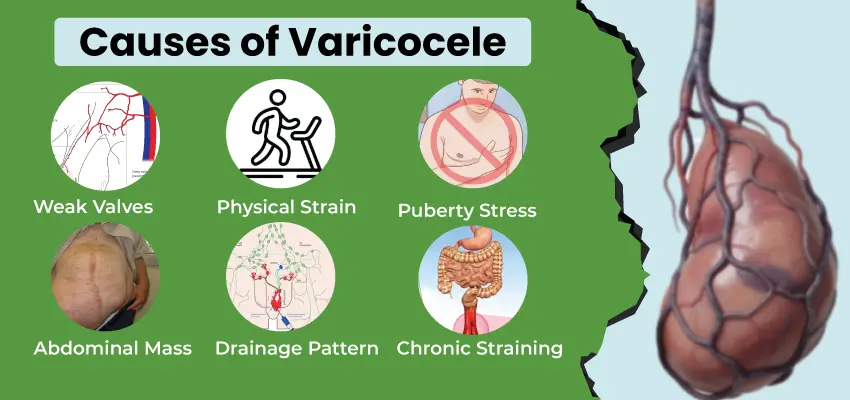
Most of the exact causes of a varicocele is unknown. Varicocele occurs when the veins in the scrotum become enlarged, similar to varicose just above the testicles.
Normally, blood flows smoothly from the two testicles blood back toward the heart. Small valves inside the veins help keep the blood moving in the right direction. When these veins have malfunction of valves, blood can not flow backward and collect in the veins. This buildup of blood causes the veins to stretch and swell, leading to a varicocele.
Varicoceles are more common on the left side of the scrotum. This is because the vein on the left side follows a longer and slightly different path then right vein to the heart, which makes blood flow slower and increases pressure in the veins.
Varicoceles often develop during puberty. At this time, the testicles grow quickly and need more blood. If the veins cannot handle this increased blood flow, blood may start to pool, causing the veins to enlarge.
Over time, the trapped blood can raise the temperature around the testicles. This extra heat may affect sperm production and, in some cases, fertility.
Varicocele Diagnosis
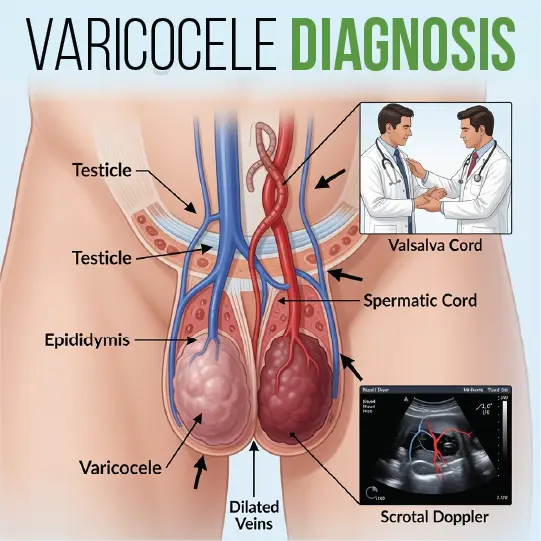
At Dot Clinics your health care provider can diagnose a varicocele by asking questions about your symptoms and review your medical history. Then he perform a physical examination during this process ask you to stand up , take a deep breath, hold it and strain to push air out. This is the Valsalva maneuver technique. They’ll feel your scrotum and by tiouch for enlarged veins as you’re holding your breath and straining.
They may also need the following tests to confirm their diagnosis:
- Imaging Test: A pelvic ultrasound is a noninvasive imaging test that gives your provider a detailed view of the veins in your testicles. It’s the most common imaging test that providers easily detect the abnormalities in the blood vessel and diagnosing varicoceles.
- Semen analysis: For semen analysis your healthcare provider ask for semen sample. Then your semen sample sended to a lab for evaluation. Where a technician examine male fertility by examining sperm count, movement (motility), shape (morphology), and volume, helping diagnose infertility or confirm a successful vasectomy by assessing sperm quality and quantity under a microscope.
- Blood test: During a blood test, your provider will use a tiny needle to withdraw a small blood sample. They’ll send your blood sample to a lab, where technicians will determine the level of hormones like testosterone, FSH (follicle-stimulating hormone).
Varicocele Treatment Cost
Varicocele treatment cost generally ranges between PKR 20,000 to 200,000, depending on city, hospital, type of surgery (open, laparoscopic, microsurgery), surgeon’s experience, and associated hospital. Dot Clinics offers affordable varicocele treatment options, with costs starting from as low as PKR 20,000 and going up to PKR 250,000, depending on the procedure and patient needs.
Varicocele Embolization Cost in Pakistan
Varicocele embolization cost in Pakistan generally ranges between PKR 50,000 to PKR 150,000, depending on factors such as the city, hospital or clinic, whether the procedure is unilateral or bilateral, the experience of the interventional radiologist, and the materials used (coils or sclerosants). At Dot Clinics, varicocele embolization costs start from PKR 60,000, but the final price depends on the patient’s condition and treatment requirements. We provide expert care and advanced equipment to permanently treat varicocele.
Varicocele Surgery Cost in Pakistan
In Pakistan, varicocele open surgery typically costs around PKR 60,000–70,000, while microsurgery or other advanced procedures may range between PKR 250,000 and 300,000. For exact pricing information, it is best to contact each clinic directly, such as Dot Clinics. We offer varicocele surgery at an affordable price of PKR 145,000 and use advanced technology to effectively deal all complications involved in the procedure.
What is the fastest way to cure varicocele?
The fastest and most effective way to treat a Varicocele is through a medical procedure, because it usually does not go away on its own. The two most common treatments are Varicocele Embolization and Microsurgical Varicocelectomy. In embolization, a doctor blocks the damaged veins using a small catheter, which improves blood flow. In microsurgical varicocelectomy, a surgeon removes or ties off the enlarged veins through a small incision. Both treatments are safe, effective, and usually allow patients to recover quickly.
Who Is a Best Candidate for Varicocele Treatment?
You may be a suitable candidate for varicocele treatments if you experience scrotal pain or pressure, enlarged veins, reduced sperm count or testicular size, or infertility related to a varicocele. Men diagnosed with infertility are particularly strong candidates for treatment, as varicoceles can increase scrotal temperature and affect sperm production, leading to low sperm count, poor motility, abnormal sperm shape, and other fertility issues. Treating the varicocele from Dot Clinics can help restore comfort, protect testicular function, and improve fertility outcomes.
Surgical Treatment of Varicocele
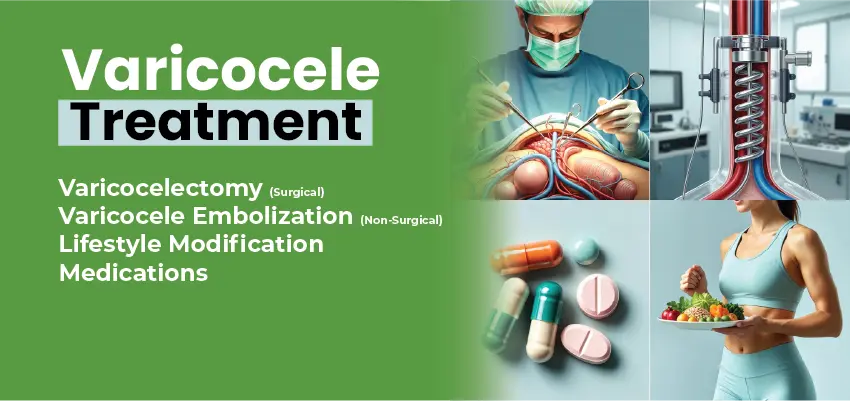
Dot Clinics treat this condition through minimally invasive varicocele embolization and the surgical procedure varicocelectomy. Varicocele embolization is a safe and effective option for those who want to avoid surgery or prefer a faster recovery. Varicocelectomy is usually done on an outpatient basis, meaning no overnight hospital stay is required. The patient typically receives general or local anesthesia, and the doctor ties off the affected vein to redirect blood flow into other healthy veins.
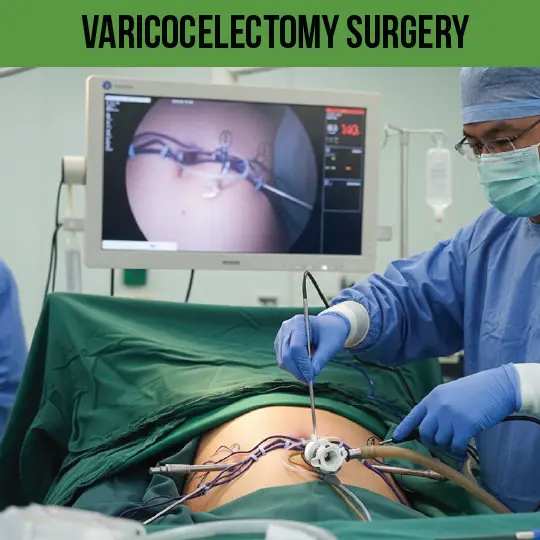
- Laparoscopic Varicocelectomy: During laparoscopic varicocele surgery, your surgeon through a video camera makes a small incision in the lower abdomen. Becuase the network of veins in the lower abdoment is not more complex. Then, they connect surgical tools attached to tiny tubes through the incision to identify and repair the effected veins. Doctors will give you anesthesia to make you sleep during laparoscopic varicocele surgery, which is usually done as an outpatient surgery. The Procedure takes time usualy 30 to 40 minutes.
- Microscopic varicocelectomy: The surgeon using a microscope to detect very small branches of veins that make up the varicocele. The varicocel can be treated with a tiny incision in your groin with the help microscope. Your surgeon will operate with a microscope to block the effected veins and eliminates the varicocele. The procedure usually lasts 2 to 3 hours. Microscopic surgery for varicocele usually lasts 2 to 3 hours and it is an outpatient procedure, meaning you can go home at the same day.
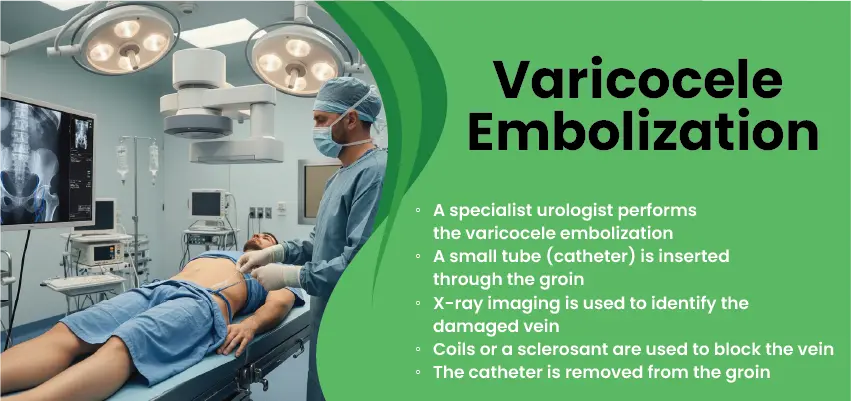
- Varicocele Embolization: A non-surgical treatment used to relieve symptoms of Grade 3 and Grade 4 varicoceles. It is performed by a specialized interventional radiologist with expertise in medical imaging. The procedure is guided by X-ray and other imaging techniques to accurately block the affected veins and restore normal blood flow. They insert a tube into a vein in your groin or neck. A local anesthesia is used at the insertion site, and you may be given a medicine to reduce discomfort and help you relax. Using imaging on amonitor the radiologist threads this tube through the vein to the treatment site.
Doctors then use this tube to deliver coils or a solution that cause scars and seals the testicular veins which are effected with varicocele. Embolization is not common as microscopic or laparoscopic varicocelectomy and lasts for an hour. Recovery time is short with only mild pain, meaning you can go home at the same day. - Why Choose Varicocele Embolization?: Varicocele embolization is a non surgical & fast recovery procedure that blocks faulty testicular veins using coils or glue, offering advantages like, less pain, no surgical scars, and high success rates (around 90%), making it a safer, quicker alternative to traditional surgery for pain relief and fertility improvement by rerouting blood flow through healthy veins.
- Medications: Dot Clinics provides expert advice on the safe and effective use of medications to manage symptoms, though there’s no pill that “cures” varicoceles, some medicines help manage symptoms:
- Pain relievers: NSAIDs include ibuprofen or acetaminophen for inflammation or pain.
- Venoactive drugs: Supplements like diosmin or hesperidin are used to help vein walls and enhance blood flow.
- Wearing supportive underwear aids to lift the scrotum and relieve discomfort.
- Keep a balanced weight as extra body weight places additional pressure on your veins.
- Consistent exercise improves circulation and reduces vein swelling.
- Avoiding extended sitting or standing helps to refrain blood from pooling, so try not to remain in one place for too long.
Varicocelectomy
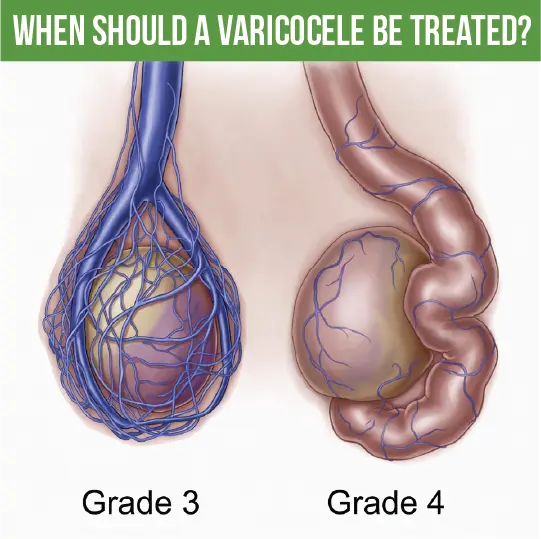
Varicocele surgery is usually recommended for grade 2 or grade 3 varicocele when symptoms or fertility problems are present. Grade 1 varicocele often does not need surgery and is managed with observation if there is no pain or fertility issue. Grade 3 varicocele most commonly requires surgery because the veins are clearly visible, pain is more frequent, and sperm quality is often affected.
Non-Surgical Techniques to Treat Varicoceles
Note: Medications mainly ease discomfort; they don’t fix the underlying vein issues.
Lifestyle Modification
Dot Clinics emphasizes the need of these lifestyle modifications for controlling varicocele symptoms:
What Are the Treatment Options for Grade 4 Varicocele?
Grade 4 varicocele is typically treated with microsurgical varicocelectomy, the gold-standard surgical procedure where the enlarged veins are tied off to restore normal blood flow, reduce pain, and improve fertility, while embolisation is a less invasive procedure where a doctor blocks the affected veins using a small tube and coils, which allows faster recovery and can be used if varicocele comes back. Some medicines and supplements like vitamins or antioxidants may help with symptoms or sperm quality, but they cannot fix the veins, so surgery or embolisation is usually needed.
When Should a Varicocele be Treated?
Many men have a varicocele without any noticeable symptoms, and in such cases, treatment is often not required. Small varicoceles causing only mild discomfort can usually be managed with observation or over-the-counter pain relievers.
Treatment becomes important when a varicocele affects testicular function. When blood pools around the testicles, it raises the local temperature, which can impair sperm production, reduce sperm motility, and, over time, lead to testicular atrophy (shrinkage of the testicles). These changes may cause to infertility and low testosterone levels.
Varicocele is typically diagnosed through physical examination and confirmed with investigations such as semen analysis, hormone testing, or scrotal ultrasound. Men with symptomatic varicoceles especially higher-grade varicoceles (Grade 3 or above), infertility, testicular pain, or abnormal semen parameters are usually advised to consider treatment.
Medications alone cannot correct the underlying blood flow problem. Surgical treatment, known as varicocelectomy, is the most effective option to restore normal blood circulation, reduce excess heat, and improve sperm quality, motility, and overall fertility.
Are varicoceles dangerous?
Varicoceles are very common and are usually not dangerous. In fact, about 15% of adult men have a varicocele. However, in rare cases, they can be associated with more serious conditions. For example, a varicocele that appears on the right side or does not decrease in size when lying down may prompt doctors to investigate for a possible abdominal mass or blockage.
Varicoceles can also affect testosterone production. Most men maintain normal hormone levels, but in some cases, testosterone levels may decline over time. Low testosterone can contribute to health issues such as reduced bone density, weight gain, and an increased risk of metabolic problems.
Varicocele Repair Specialist
Dot Clinics has experienced radiologist and Surgeons specializing in varicocele repair. Dr. Amjad provides varicocele treatment in Multan, while Dr. Faisal Ilyas is available in Lahore. Both doctors are expert in surgical and non-surgical treatment options of varicocele. At Dot Clinics, we focus on understanding each patient’s complete medical history and develop a personalized treatment plan to ensure safe, effective, and long-term results. Dr.Faisal Ilyas also have a good experience in Penile Implant surgery.
Varicocele Treatment Near Me
Looking for varicocele treatment near me for enlarged veins and fertility issues? Dot Clinics in Multan (Main Abdali Road) and Lahore (Johar Town) provides advanced varicocele repair treatments for men’s reproductive health. Receive expert care from experienced sexologists and urologists near you.

Why Trust Dot Clinics For Varicocele Treatment?
- Dot Clinics specializes in advanced, non-surgical varicocele embolization, offering a walk-in, walk-out experience that avoids the surgical risks of traditional procedures. Their approach uses interventional radiology to block problematic veins via a small groin catheter, providing fast recovery, high success rates, and improved fertility without pain or scarring. While many people believe that surgery, such as varicocelectomy, is the best way to treat a varicocele, we also provide this option for patients who prefer a surgical approach.
- We provide best care to patitent from the very first visit to that very last follow-up, our friendly and attentive staff is simply there for you, listening, guiding, and ensuring that your entire medical history receives due care. We consider the whole scenario, not only the symptoms. Our strategy combines medical knowledge with lifestyle advice to assist you in achieving long-term wellness rather than only short relief. Your medical data remains private and always handled respectfully.
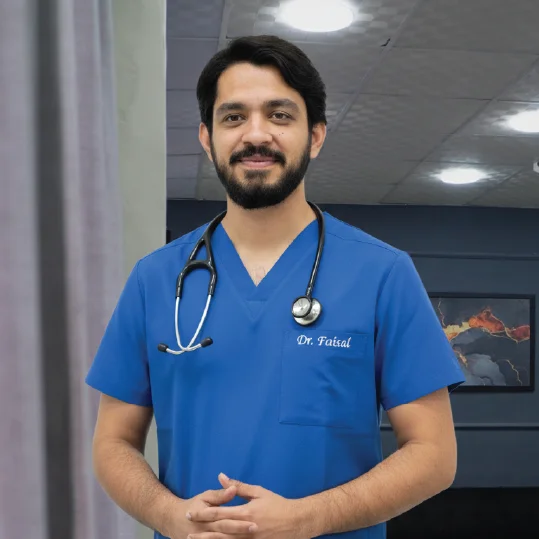
Dr. Faisal Ilyas
Urologist & Penile Implant Specialist
The content of this page is for informational purposes only.
Please consult with our Urologist & Penile Implant Surgeon for diagnosis and varicocele treatment.
FAQ's
- Aching pain in the testicle (usually left side)
- Visible or enlarged veins in the scrotum
- Testicle feels heavier
- Swelling or a lump in the scrotum
- Reduced sperm count or quality (in some instances)
Yes. Varicocele can occasionally affect sperm quality and generation, hence adding to infertility problems. Not everyone having a problem with varicocele experiences fertility issues.
Usually, doctors palpate the scrotum as you are standing and ask you to take a deep breath and bear down. Ultrasound is most probably used to confirm the diagnosis.
Not always. If it is not causing discomfort or fertility issues, it does not need treatment. But still it's vital to monitor and get it evaluated.
We provide complete confidentiality, sophisticated surgical procedures, and experienced care. From diagnosis to recovery time, our team supports you with compassion and cutting-edge solutions to improve both comfort and fertility.