

Hair transplant is an upgraded procedure in the field of hair loss treatment. But it can be costly for many people not to go under anesthesia, as it is a source of great disturbance. After going through this, what if the results are not according to your expectations? That is why it is necessary to know about hair transplant side effects.
Knowing about these side effects and understanding how to manage them is basic to ensure the success of the process and a smooth recovery.
In this blog, 7 things you should know about the side effects of hair transplant. Let’s go through the most important things you should know, along with the possible side effects.
1. Results Take Time
One of the biggest misunderstandings is that you will step away from the clinic with full hair. That is not how it actually works. After a hair transplant, the replanted hairs usually fall within a few weeks. This is normal and its part of the operation. New hair starts growing after 3 to 4 months, and full results can take up to 9–12 months.
So be patient and don’t expect instant results; you will feel disappointed.
2. Not Everyone Is a Good Candidate
Hair transplant may not be suitable for everyone. The doctor usually checks the back of your head, which is actually the donor area. If you do not have enough healthy hair there, then the results may not be good.
People with severe hair loss, medical conditions, or rough hair quality may not be perfect candidates. That’s why a proper advisory session is necessary before the procedure.
3. It’s a Surgical Procedure
Even though it is recognized as safe, the hair transplant is a simple surgical procedure. It includes removing hair follicles and inserting them into thinning areas. There are two common methods:
FUT (strip method)
FUE (follicular unit extraction)
Both methods have their advantages and disadvantages. Your doctor will suggest what suits you best after checking your hair condition. Because it is a medical procedure, you should always choose an experienced doctor. Do not go for cheap options without checking the clinic properly.
4. Results Depend on the Doctor’s Skill
This is the main thing that many people ignore. A hair transplant is not just about transferring hair it is about building a natural look. The angle, direction, and density of hair matter a lot.
An experienced and well-trained doctor knows how to design a natural hairline that suits your face. If the transplant is done poorly, then it looks unnatural and may even need correction later. So always check:
- Before and after results
- Reviews from real patients
- Clinic hygiene and standards
5. You May Need More Than One Session
Many people think one session is enough. But in reality, it depends on your hair loss conditions. If you have wide bald areas, you might need 2 or more sessions to attain good density. Hair loss can also continue over time, so further treatments may be needed. Consider it as an extended plan, but not a one-time fix.
6. Proper Aftercare Is Very Important
The success of your hair transplant does not depend only on the procedure, but it also depends on how you take care of your scalp afterward. Ignoring aftercare can affect your results and slow down the healing process. After the procedure:
- Avoid touching or scratching the scalp
- Stay away from direct sunlight
- Do not use harsh shampoos
- Follow all instructions given by your doctor
7. It Can Be Expensive
Hair transplant is not cheap, especially if done by a skilled doctor. You should always focus on quality over price. It may feel costly, but going for cheap procedures can lead to poor results, which may cost you more in the future to fix. Prices vary depending on:
- Number of grafts
- Clinic location
- Doctor’s experience
For exact and up-to-date pricing, it’s best to reach out to Dot Clinics. They can guide you based on your hair condition and overall treatment plan.
Hair Transplant Main Complications
Although hair transplant is safe, like any surgical procedure, it comes with some complications. Most of these are temporary and manageable, especially when the procedure is done by a skilled doctor. Main complications include swelling, itching, temporary hair, and, in rare cases, infection or scarring. Ask questions about hair transplantation to your doctor.
The good news is that serious complications are rare. Choosing an experienced surgeon and following proper aftercare instructions can reduce these risks and help smooth recovery.
Common Side Effects of Hair Transplant
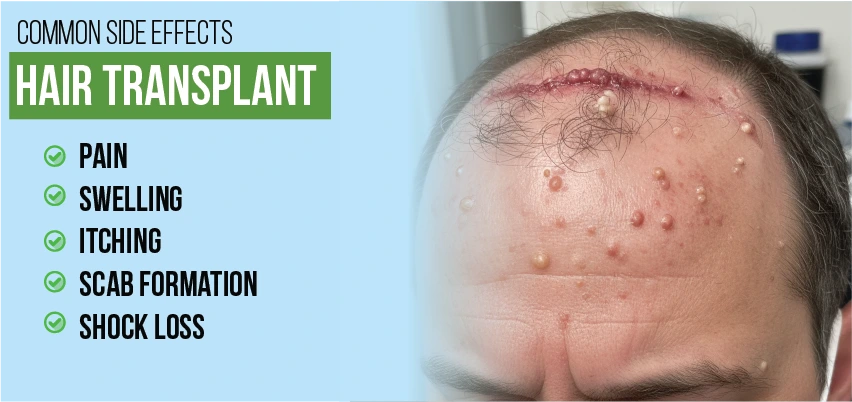
Hair side effects are usually temporary and easy to manage. When the procedure is done properly in a clean environment and followed by good aftercare, recovery is usually smooth.
1. Swelling
The most common hair transplant side effects are swelling. As you recover from your procedure, you might experience some swelling around your forehead and your eyes. It usually takes 2-3 days.
2. Pain or Discomfort.
It is another common side effect that you may feel mild pain or tightness in the treated area. Doctors usually prescribe medication to manage this. So it is not a big issue, and due to surgery, it takes 2-3 days for our scalp to adjust.
3. Itching
As your scalp heals, you may feel itching in your receiver and donor areas. This usually starts after a few days and may last around 7–14 days. Avoid scratching it, as it can damage the grafts.
4. Temporary hair fall
This is one of the most common side effects. You might notice some of the transplanted hair and even nearby hair falling out for a while. It may look scary, but don’t panic because hair usually starts growing back 2- 4 weeks after the procedure.
5. Infection (Rare)
If proper hygiene is not maintained, there is a small risk of infection. It can develop within the first 3–7 days after surgery. However, with proper care and medication, it can be treated effectively.
6. Scarring
Scarring is not very common but can occur depending on the method used. FUT (Follicular Unit Transplantation) linear scar may remain, while FUE (Follicular Unit Extraction) may leave tiny dot scars. Initial healing takes around 10–14 days, and scars may take a few weeks to months to fully fade.
Why Side Effects Happen (10 Things to Know)
Understanding why side effects happen can help you stay calm and manage your expectations better. Here are 10 important reasons:
1 Surgical Trauma
The scalp goes through a procedure, so some swelling and discomfort are natural.
2 Healing Process
Itching and redness occur as the skin heals.
3 Shock Loss
Temporary hair fall happens due to stress on hair follicles.
4 Poor Aftercare
Not following instructions can slow healing or cause infection.
5 Inexperienced Surgeon
Poor technique can lead to unnatural results.
6 Health Issues
Healing may take longer in some individuals.
7 Infection Risk
Lack of hygiene can lead to minor infections.
8 Scalp Sensitivity
Some people naturally react more after surgery.
9 Poor Blood Supply
Can affect graft survival
10 Unrealistic Expectations
Sometimes what feels like a side effect is actually a misunderstanding of the timeline.
7. Uneven or Unnatural Results
Poor growth or patchiness can come from graft handling, placement angle, or excessive trauma during the hair transplantation procedure. Sometimes hair starts later in one zone than another, so uneven early growth does not always mean failure. But an unnatural hairline usually reflects planning errors, not patience. If the procedure is not done correctly, hair may grow in the wrong direction or look patchy. This usually happens when it is done by an inexperienced person.
Final Thoughts
Any surgical procedure will have its own set of difficulties. A hair transplant can be a life-changing solution if it is done the right way. It can improve your appearance and can enhance your confidence. But it is not something you should hurry into. Take your time, do proper research, and talk to a qualified doctor. A hair transplant is not different.
The side effects of a hair transplant are usually manageable, especially if you choose an experienced surgeon. Most importantly thing keep your expectations realistic. Hair transplant can regrow your hair, but not completely change your face overnight. With the right mindset and a skilled clinic, you can achieve natural and satisfying results.
Is a hair transplant painful?
The procedure is usually done under local anesthesia so that you do not feel pain during it. You may feel mild discomfort afterward, but it’s manageable.
How long does it take to see results?
Hair growth takes time. You may start noticing new hair after 3 to 4 months, with full results in around 9 to 12 months.
Is the result permanent?
Yes, in most cases, the transplanted hair is permanent because it comes from areas resistant to hair loss.
Are there any serious side effects?
Most side effects are mild and temporary, like swelling, itching, or shedding. Serious complications are rare if the procedure is done properly.
When can I return to normal activities?
Most people can go back to work within a few days, but full recovery and proper healing may take a couple of weeks.