Hair Transplant in Pakistan
FUE and DHI Procedure | Dot Clinics Lahore & Multan
Hair transplant surgery is one of the most effective solutions for people experiencing permanent hair loss. Hair transplant in Pakistan carefully removes healthy hair follicles from a donor area, the back or side of the scalp, and implants them into bald or thinning areas such as the front hairline or the top of the head.
Hair fall caused by genetic conditions such as male pattern baldness is a common concern for many individuals. When hair loss becomes noticeable, it can affect both appearance and confidence. Hair transplantation helps restore natural hair growth by relocating healthy follicles to areas where hair density has reduced.
At Dot Clinics, patients can consult with experienced hair transplant specialists in Lahore and Multan to determine the most suitable treatment based on the pattern of hair loss, the size of the bald area, and individual expectations. The clinic offers advanced hair restoration techniques designed to create natural-looking hairlines and long-lasting results.
Hair transplantation is not only a medical procedure but also a precise process that requires skill and aesthetic understanding. When performed correctly, it can restore a natural hairline and improve overall hair density.
Credentials
Our Patients Hair Transplant Videos

What is a Hair Transplant?
A hair transplant is a surgical hair restoration procedure used to treat thinning hair, bald patches, and permanent hair loss in both men and women. The treatment works by transferring healthy hair follicles from a donor area of the scalp to areas where hair growth has reduced or stopped. In most cases, donor hair is taken from the back or sides of the head because these follicles are genetically resistant to hair loss.
One of the most common causes of hair loss is the hormone dihydrotestosterone (DHT). This hormone gradually weakens hair follicles in certain areas of the scalp, leading to thinning hair and eventually baldness. This condition is widely known as male pattern baldness, which usually begins around the temples or crown and can expand across the top of the scalp over time.
Hair transplant surgery addresses this issue by relocating DHT-resistant follicles to the affected areas. Once transplanted, these follicles continue to grow naturally because they retain their original genetic characteristics.
Modern techniques such as FUE and FUT are commonly used for this procedure. Surgeons carefully extract follicular grafts from the donor area and implant them into the recipient area with attention to depth, angle, and direction so the new hair blends naturally with the existing hairline.
At Dot Clinics, advanced techniques are used to restore natural hair density and create a balanced hairline suited to each patient.
How Do Hair Transplants Work?
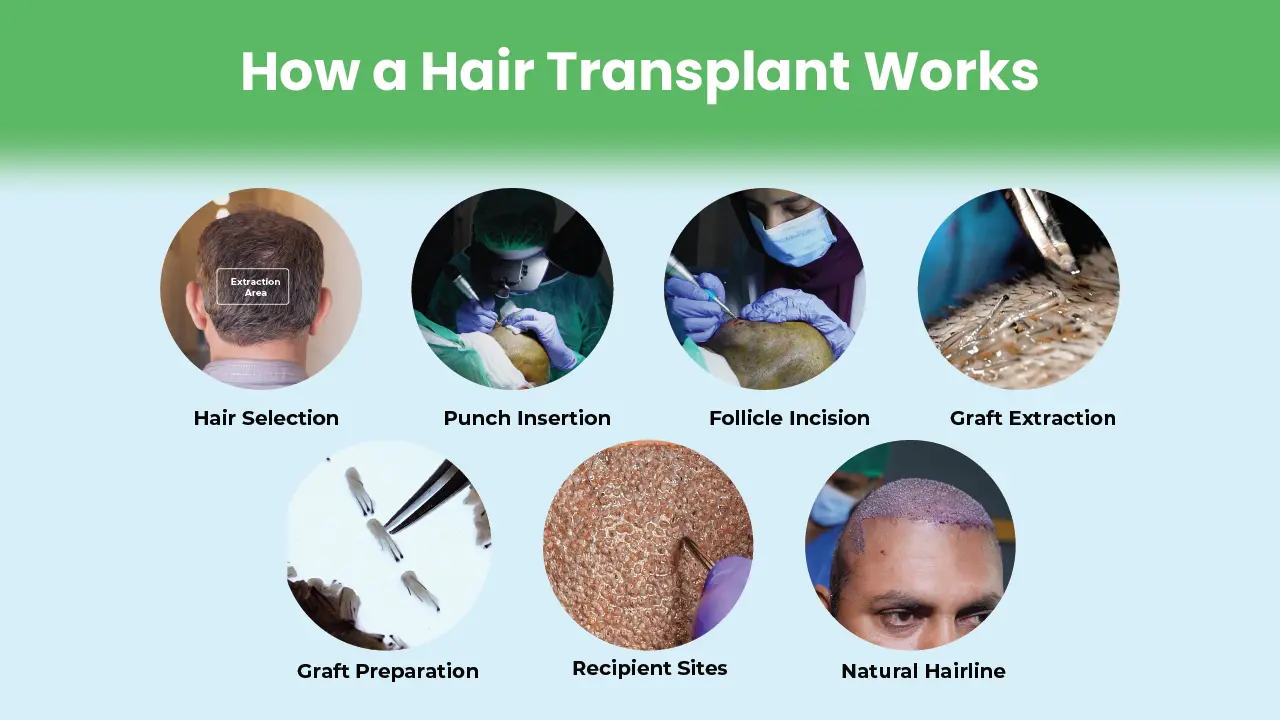
Hair transplant surgery is a medical procedure used to restore hair growth in areas affected by thinning or baldness. In a hair transplant procedure, healthy hair follicles are taken from a donor area of the scalp, usually the back or sides of the head, where hair is genetically resistant to hair loss. These follicles are then implanted into the balding areas to restore natural hair density.
1. Hair Selection and Donor Area Preparation
The procedure begins with identifying the donor area that contains strong and healthy hair follicles. This area is carefully prepared so that the surgeon can safely remove grafts without damaging the surrounding hair.
2. Hair Follicle Extraction
Using modern techniques such as follicular unit extraction (FUE), the surgeon removes individual hair follicles with a small punch device. Each graft usually contains one to four hair strands.
3. Graft Preparation
After extraction, the follicles are carefully examined and prepared to ensure they remain healthy for transplantation.
4. Creating Recipient Sites
Tiny incisions are made in the thinning or bald areas of the scalp. These are designed to control the direction and angle of new hair growth.
5. Implantation and Natural Growth
Finally, each follicle is implanted into the prepared sites. Once the grafts adapt to their new location, they begin growing naturally as part of the normal hair growth cycle.
Hair transplant procedures at Dot Clinics are designed to create natural-looking hairlines and long-lasting results.
Who is a Good Candidate for Hair Transplant?
Hair transplant surgery in Pakistan is an effective solution for people experiencing permanent hair loss or thinning hair. However, not every person with hair fall requires surgery. A professional consultation with an experienced hair transplant surgeon helps determine whether the patient has a suitable donor area and a stable hair loss pattern.
At clinics like Dot Clinics, specialists evaluate the scalp condition, hair density, and medical history before recommending hair transplant treatment.
Ideal Candidates for Hair Transplant
You may be a good candidate for hair transplant surgery if you have:
- Male pattern baldness or hereditary hair loss
- Female pattern hair thinning with a stable donor area
- Hair loss caused by injury, burns, or scars
- Healthy hair growth on the back or sides of the scalp (donor area)
- Realistic expectations about hair density and results
Who May Need Alternative Treatments
Some patients may not be ideal candidates for a hair transplant procedure, such as:
- People experiencing temporary hair shedding
- Patients with diffuse hair loss without a strong donor area
- Individuals with certain medical conditions affecting hair growth
In such cases, doctors may recommend non-surgical hair loss treatments before considering hair transplant surgery.
What are The Types of Hair Transplant Surgery?
In Pakistan, modern clinics use advanced techniques to restore natural hair growth by moving healthy hair follicles from a donor area to bald or thinning parts of the scalp. The success of the procedure depends on the surgeon’s expertise and the technique used. At Dot Clinics, surgeons assess each patient’s hair loss pattern, donor hair quality, and goals to recommend the best treatment.
The three main hair transplant methods are FUE (Follicular Unit Extraction), DHI (Direct Hair Implantation), and FUT (Follicular Unit Transplantation). Each technique differs in how hair follicles are extracted and implanted, but all aim to achieve natural-looking hair growth and better hair density.
- No visible linear scar after surgery
- Faster healing time (usually 7–10 days)
- Ability to extract grafts from body hair if needed
- Minimal post-operative discomfort
- Most patients return to work within 3–5 days
- Ideal for patients who prefer short hairstyles
- Direct implantation without pre-making recipient incisions
- Precise control of hair depth, angle, and direction
- Higher graft survival rate
- Improved hair density and natural results
- Suitable for detailed hairline design
FUE (Follicular Unit Extraction)
FUE is one of the most advanced and minimally invasive hair transplant techniques used for hair restoration. In this method, individual follicular grafts containing one to four hairs are extracted from the donor area using a micro-punch tool and then implanted into the thinning or bald areas of the scalp.
FUE is commonly recommended for patients who want natural hairline restoration with minimal scarring.
Learn more about the procedure, benefits, and recovery in our detailed guide on FUE hair transplant in Pakistan.
DHI (Direct Hair Implantation)
DHI is an advanced variation of the FUE technique in which hair follicles are implanted directly into the scalp using a specialized Choi Implanter Pen. This method allows surgeons to place each follicle with high precision for natural hair density and accurate hairline design.
DHI is often chosen for patients who want high precision hair transplantation and dense hairline restoration at Dot Clinics.
For a detailed explanation of this advanced technique, visit our complete guide on DHI hair transplant in Pakistan.
FUT(Follicular Unit Transplantation)
FUT is an older hair transplant technique in which a thin strip of hair-bearing scalp is removed from the back of the head. Individual hair follicles are then separated from this strip and transplanted into the balding areas. Although FUT can provide a large number of grafts in a single session, it may leave a linear scar in the donor region.For this reason, clinics today generally prefer modern techniques such as FUE and DHI for better aesthetic outcomes and patient comfort.
You can also explore the traditional strip method in our guide about FUT hair transplant surgery.
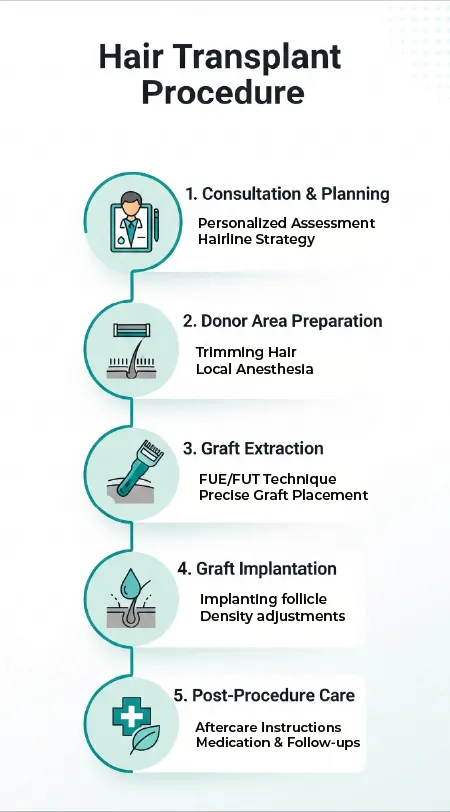
Hair Transplant Procedure Step by Step at Dot Clinics
A hair transplant procedure follows a structured process to ensure safe surgery and natural-looking results. At experienced clinics in Pakistan, the procedure is carefully planned from the first consultation to the final implantation stage. At Dot Clinics, the focus is on designing a natural hairline and transplanting healthy follicles in a way that matches the patient’s natural hair growth pattern.
Below is a simplified timeline of the hair transplant surgery process.
Consultation
The first step is a detailed consultation with a hair transplant surgeon. During this stage, the doctor examines the scalp, evaluates the hair loss pattern, and checks the strength of the donor area. The surgeon also estimates the number of grafts required and recommends the most suitable method such as FUE or DHI hair transplant.
Hairline Design
Before the procedure begins, the surgeon carefully designs the new hairline according to the patient’s facial structure, age, and hair density. Proper hairline planning is essential to achieve a natural appearance after the hair transplant surgery.
Hair Follicle Extraction
Healthy hair follicles are extracted from the donor area, usually located at the back or sides of the scalp. Modern techniques like FUE allow surgeons to remove follicles individually with minimal scarring.
Hair Implantation
In the final stage, the extracted follicles are implanted into the thinning or bald areas of the scalp. Each graft is placed with attention to direction, angle, and spacing so that the new hair grows naturally and blends with the existing hair.
This step-by-step process ensures that patients receive safe treatment and natural hair restoration results.
Is Hair Transplant Painful?
- During Procedure: Pain is minimal. You'll be comfortable the whole time due to local anesthesia. Pressure you'll feel when grafts are being placed, but no ache. Most patients see movies or listen to music throughout the procedure.
- After Procedure: Slight pain for 2-3 days, which can be controlled comfortably with prescribed pain relief medicine. It feels like a moderate degree of sunburn. The donor area is typically more comfortable than the recipient area.
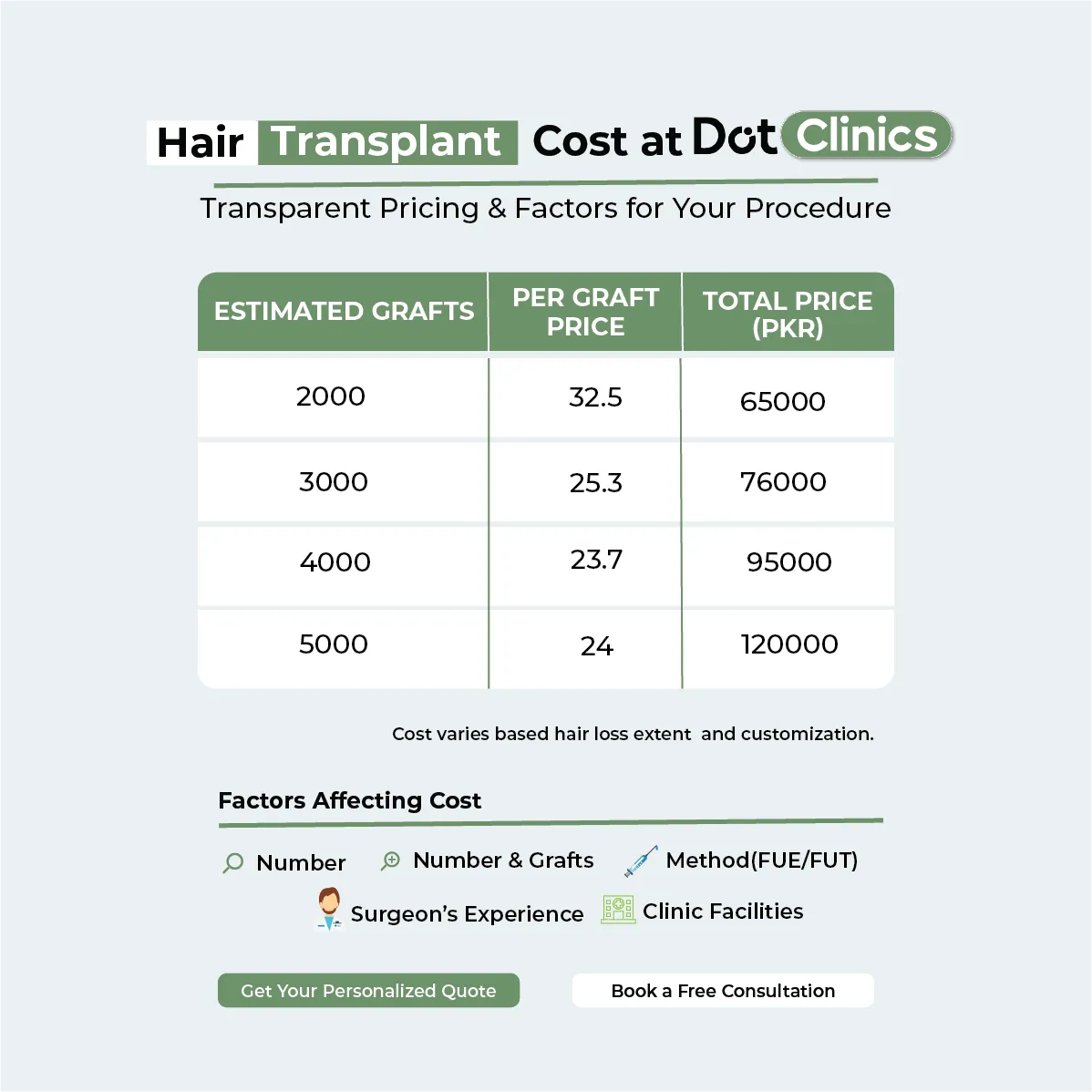
Hair Transplant Cost in pakistan
The hair transplant cost in Pakistan varies depending on several factors such as the number of grafts required, the hair transplant technique used, and the experience of the surgeon performing the procedure. In most cases, patients with early-stage hair loss require fewer grafts, while individuals with advanced baldness may need larger sessions to restore natural hair density.
At Dot Clinics, the cost of hair transplant surgery is determined after a detailed scalp analysis and consultation with an experienced hair transplant surgeon. During the consultation, specialists examine the pattern of hair loss, donor hair strength, and the number of grafts needed to achieve natural-looking results.
At Dot Clinics we offers affordable and competitive pricing for hair transplant in Lahore and Multan. The average cost is between 70,000 to 110,000 for 1000 to 4000 grafts at our clinic.
Average Hair Transplant Price in Pakistan
The hair transplant price in Pakistan is usually calculated based on the number of grafts required for the procedure. On average:
- Small procedure (1000–1500 grafts) – suitable for minor hairline correction – PKR 80,000–120,000
- Medium procedure (2000–3000 grafts) – used for moderate hair thinning – PKR 180,000–250,000
- Large procedure (3500–5000 grafts) – recommended for advanced baldness – PKR 300,000–450,000
Modern techniques such as FUE and DHI hair transplant may have slightly different pricing depending on the tools and surgical precision required.
Factors That Affect Hair Transplant Cost
Several factors can influence the overall hair transplant surgery cost in Lahore and Multan, Pakistan, including:
- Number of grafts required for coverage
- Hair transplant method (FUE, DHI, or FUT)
- Surgeon’s experience and clinic reputation
- Quality of equipment and surgical tools
- Post-surgery care and follow-up services
Although price is an important factor, choosing an experienced surgeon and a reputable hair transplant clinic is essential for achieving safe procedures and natural results.
For detailed pricing information and graft estimates, you can visit our complete guide on hair transplant cost in Pakistan.
What is The Recovery Time?
After a hair transplant surgery, mild redness or swelling may occur and is usually controlled with medications. Bandages are typically required for a few days. Most patients can return to light work within 2–5 days, while heavy physical activities should be avoided for about a week. Antibiotics or anti-inflammatory medicines and guidelines may be prescribed to prevent infection and reduce swelling.
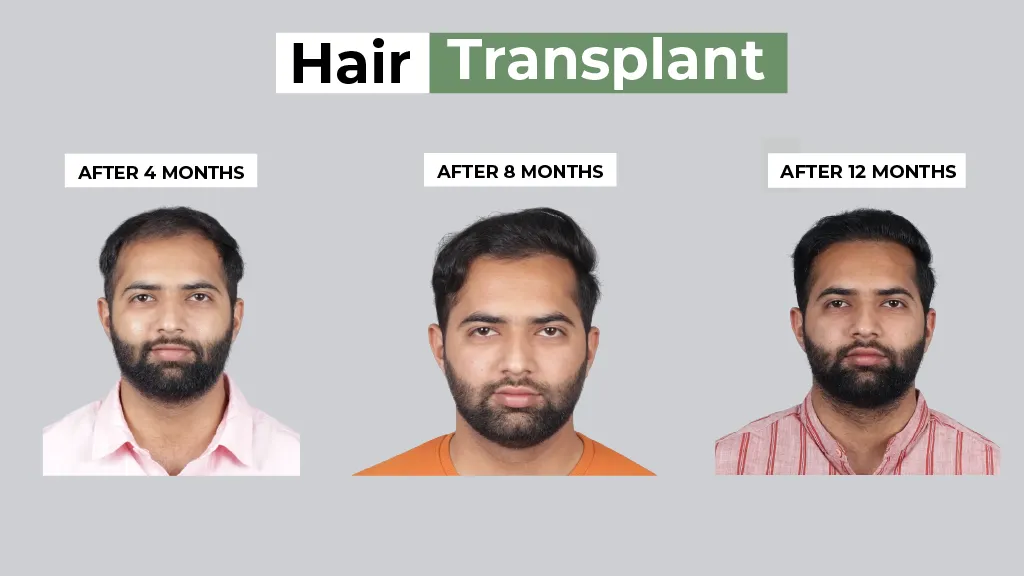
When do Transplanted Hair Follicles Start Growing Again?
The transplanted hair follicles will initially shedding (shock loss) within 2 to 4 weeks. Patients can expect to see new hair growth between 3 – 4 months after the surgery become noticeable in 6th months. Full results are usually seen after 9 – 12 months, depending on individual healing and hair growth cycles. However, there is a chance that the transplanted hair may not grow, and the patient may need to undergo another procedure.
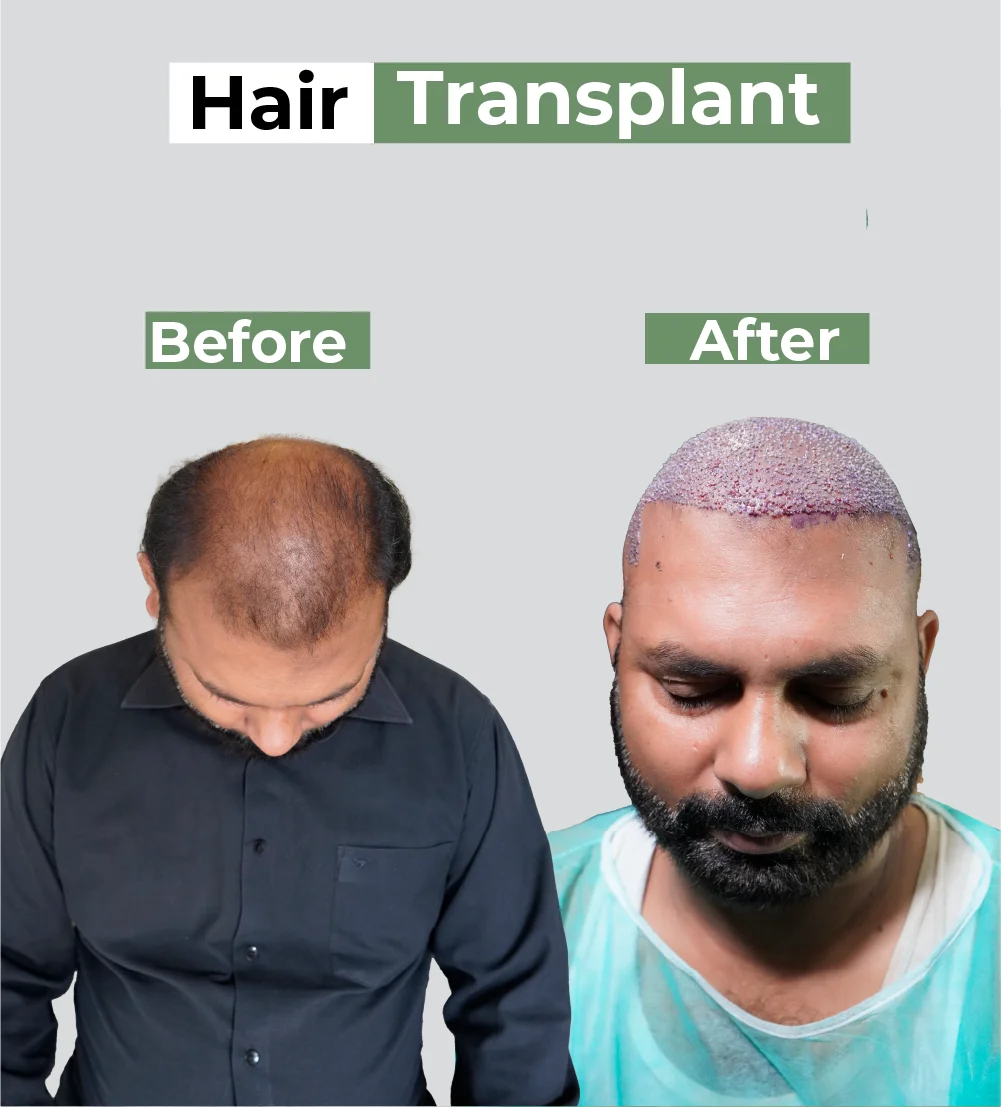
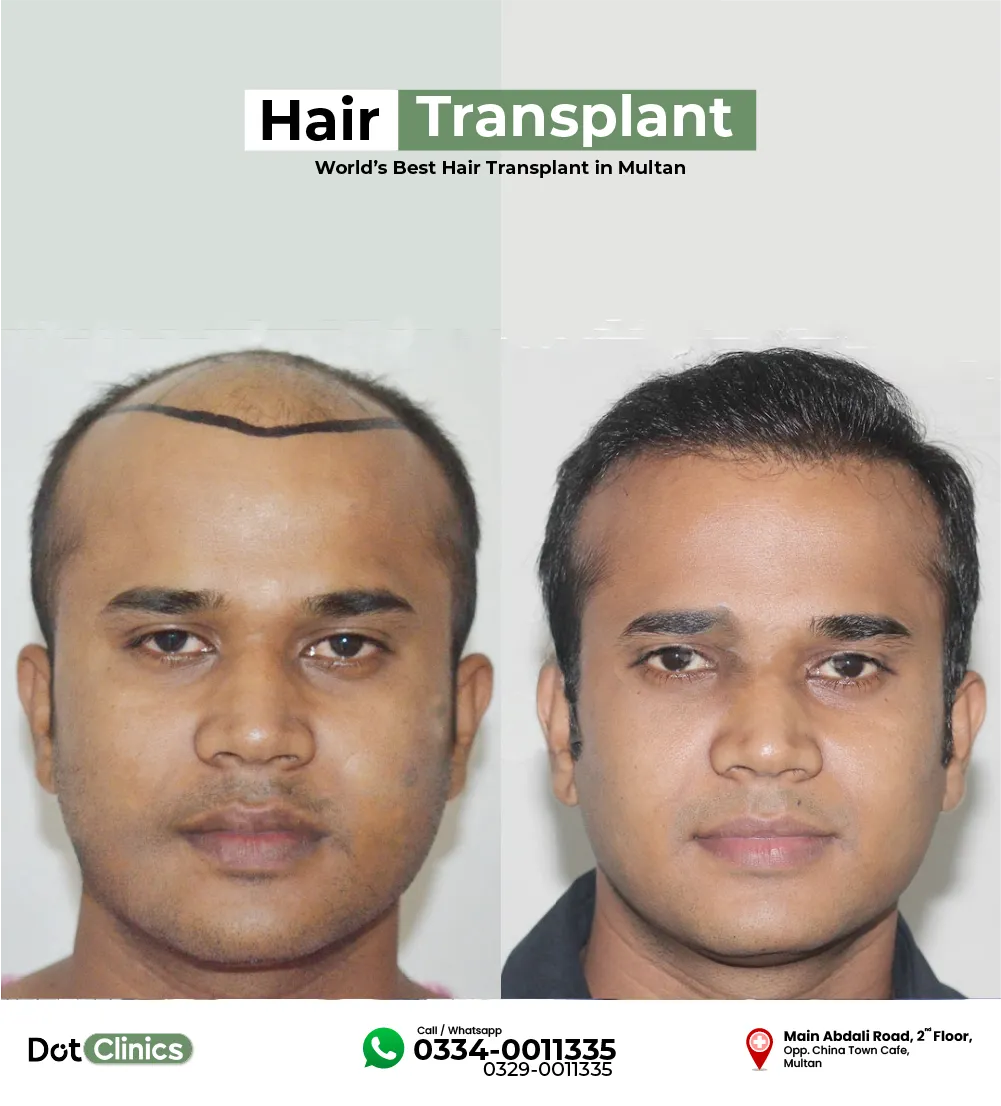
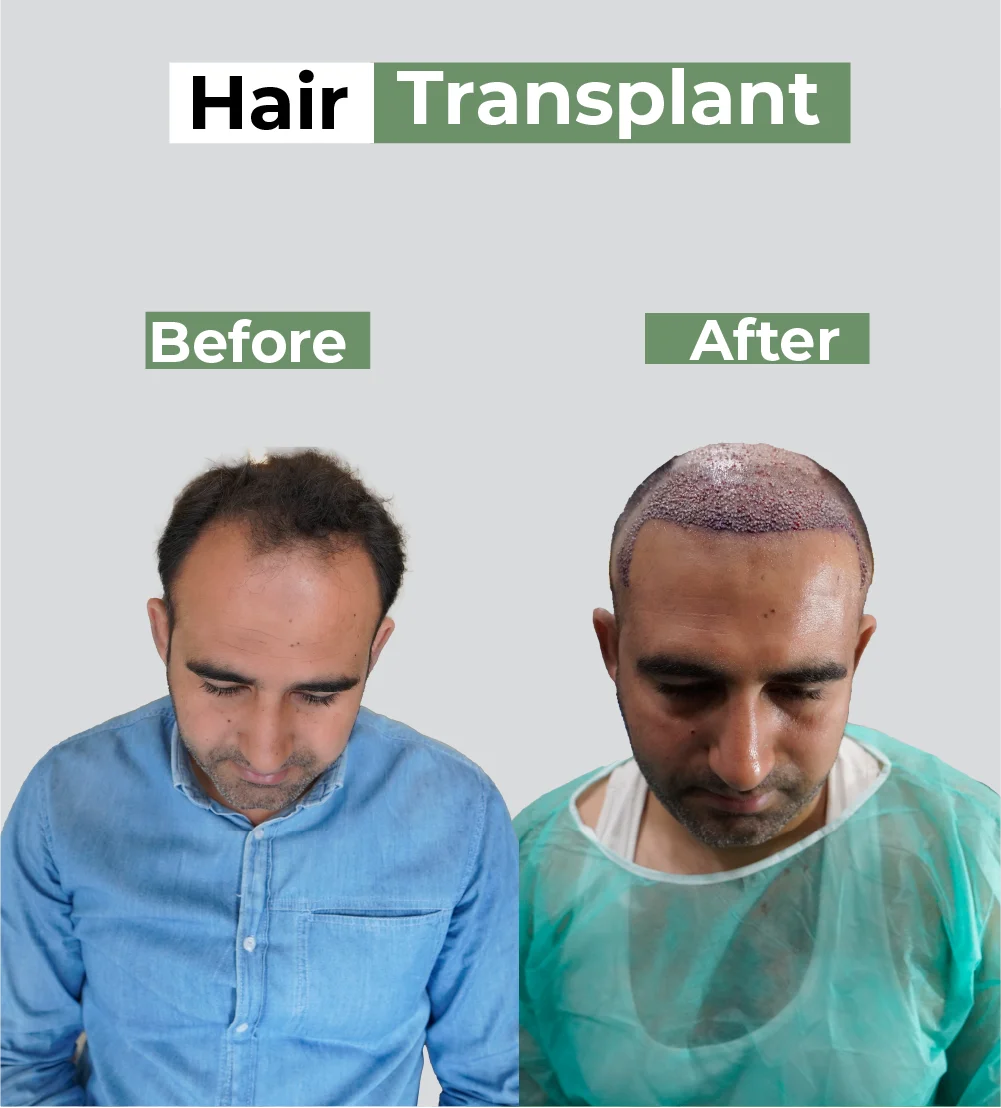
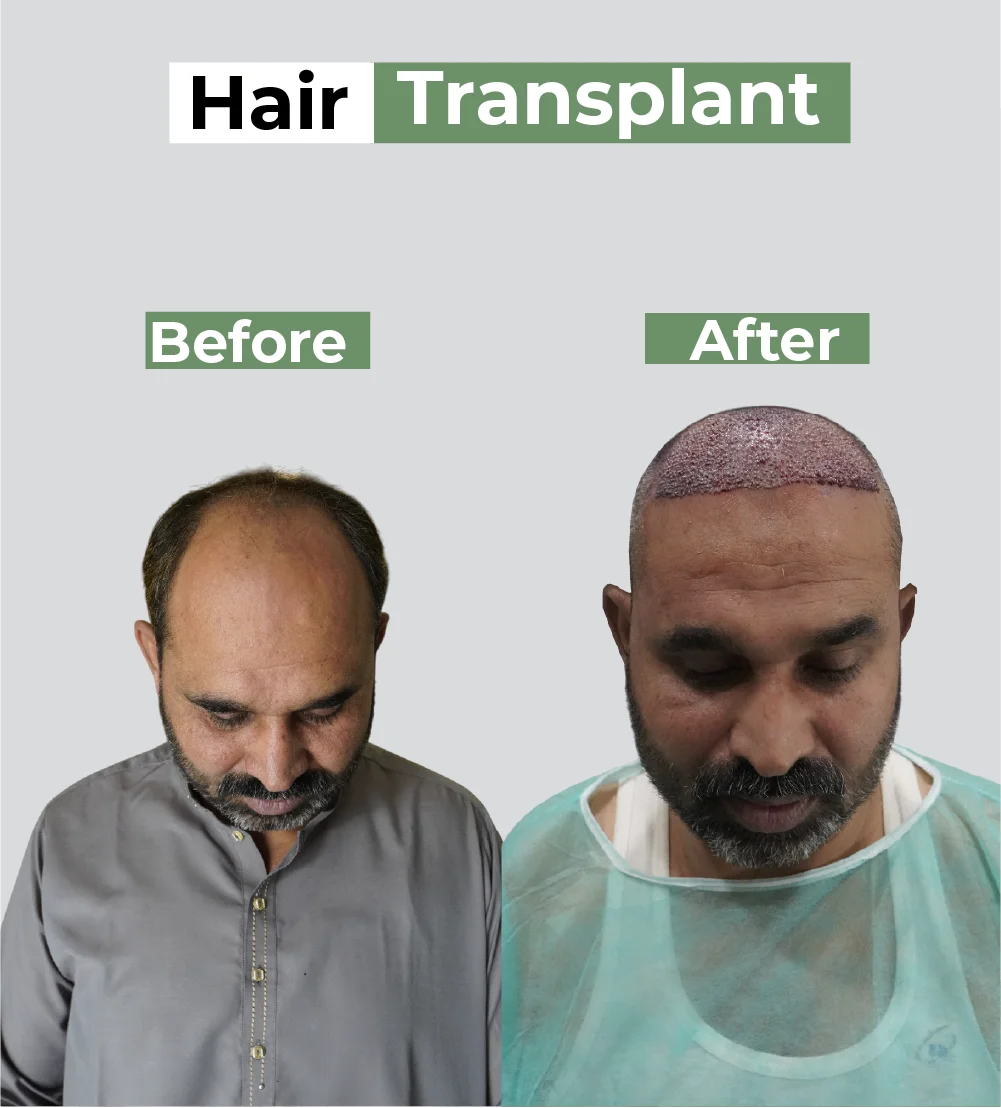
Before and After Photos
Benefits of Hair Transplant
- Permanent Hair Loss Solution: Hair transplant provides long-term results as transplanted follicles resist hair fall.
- Natural-Looking Hair Growth: Hair taken from your own scalp blends perfectly with existing hair.
- Low Maintenance Treatment: No lifelong medicines or special shampoos are required after healing.
- Minimal Scarring: Advanced techniques like FUE and DHI leave almost no visible scars.
- Real & Growing Hair: Transplanted hair can be cut, washed, and styled like natural hair.
What are Potential Side Effects
Like any surgical procedure, a hair transplant may have mild side effects, which typically lasts within a few days:
- Temporary Swelling & Redness: Common in the first few days post-surgery.
- Mild Discomfort: Some patients experience tenderness at the donor and recipient sites.
- Shock Loss: Temporary shedding of transplanted hair before new growth begins.
- Scabbing & Itching: Part of the healing process but manageable with proper care.
- Minor Infection Risk: Extremely rare when post-op guidelines are followed.
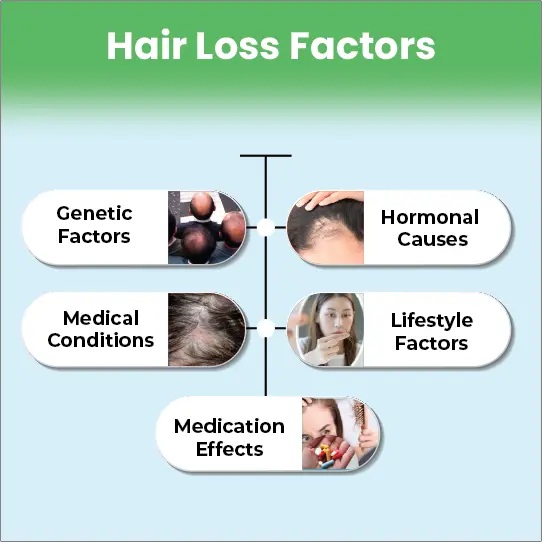
What are The Causes of Hair loss?
Hair loss can be caused by many reasons or temporary factors like:
- Genetics (androgenic alopecia)
- A family history of baldness
- Hormonal Change
- Lifestyle Changes, Stress
- Aging
Treatment and Prevention:
Hair transplantation is routinely performed for men, as are medical treatments such as Minoxidil. PRP treatment and hormonal evaluation are beneficial for women.
Consistent care and early cure are the requirements for good hair longevity.
Expert Hair Transplant Surgeons in Pakistan
Hair transplant procedures at Dot Clinics are performed by experienced specialists who focus on natural hairline design and precise follicle implantation. Our clinics serve patients seeking hair transplant surgery in Pakistan with modern techniques such as FUE and DHI.
Dr. Ayesha Malik – Multan ClinicDr. Ayesha Malik leads hair transplant treatments at our Multan clinic, where she specializes in detailed scalp evaluation, donor area analysis, and natural hairline restoration.
Dr. Hamza – Lahore ClinicDr. Hamza performs hair transplant procedures at our Lahore clinic, focusing on advanced follicle extraction and precise graft implantation to achieve natural hair density and long-lasting results.
Why Choose Dot Clinics for Hair Transplant in Pakistan
Choosing the right clinic is essential for achieving safe procedures and natural hair restoration results. At Dot Clinics, patients receive personalized treatment plans based on their hair loss pattern, donor hair availability, and desired hairline design. Our clinics in Lahore and Multan use modern hair transplant techniques such as FUE and DHI to ensure precise follicle extraction and natural implantation.
Our team focuses on restoring natural hair density while maintaining the correct direction and angle of hair growth.
What Makes Dot Clinics Different
- Experienced hair transplant specialists
- Modern FUE and DHI hair transplant techniques
- Natural hairline design based on facial structure
- Advanced surgical equipment and sterile environment
- Personalized consultation and treatment planning
- Post-procedure care and follow-up support
With a focus on precision and patient care, Dot Clinics aims to deliver natural-looking and long-lasting hair transplant results for patients across Pakistan.
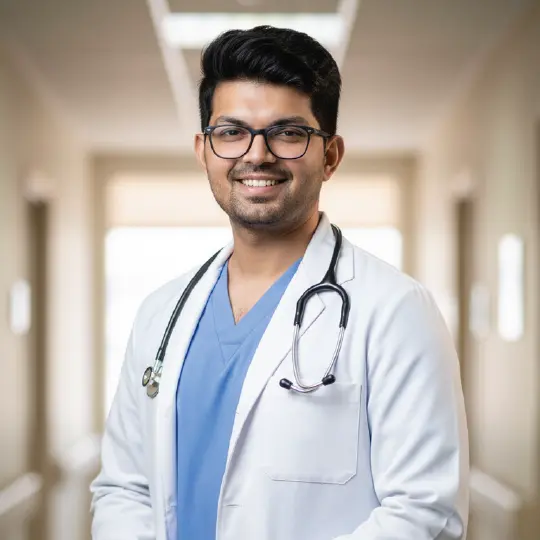
Dr. Hamza Ahmad
Plastic Surgeon & Hair Transplant Specialist
The content of this page is for informational purposes only.
Please consult with our Plastic Surgeon for diagnosis and treatment.
HAIR TRANSPLANT FAQ's
Noticeable hair growth starts after three to four months, with full results within a year.
No, it did not ensure a complete resistance to future hair loss.
Yes you can dye and style new hair as you wish.
Hair transplantation is a permanent solution for balding. It is the process where existing hair-bearing follicles are grafted from the donor sites on the sides and the back of the head, where the follicles are resistant to the balding hormone, dihydrotestosterone (DHT). Grafted follicles to balding sites will grow their hair forever, retaining their resistance. Although the existing, naturally growing hair may become thin eventually, grafted hair is permanent.
There are two possible ways that the hair transplant may fail: poor growth rate/low-yielding growth, or unrealistic appearance. Low-yielding growth is encountered when the grafts are injured, so the survival level drops below the desired 85–95%. Unrealistic appearance is encountered by an incorrect design of the hairline or an incorrect angle and direction of the transplanted grafted hair. Low yield is best treated by waiting 12–18 months before re-assessment and plotting the revision procedure. Unnatural looks are treated by reversal of poorly placed grafts, micro-grafting, or additional grafting to augment the appearance. True failures are best managed by judicious evaluation and tactical revision strategy.