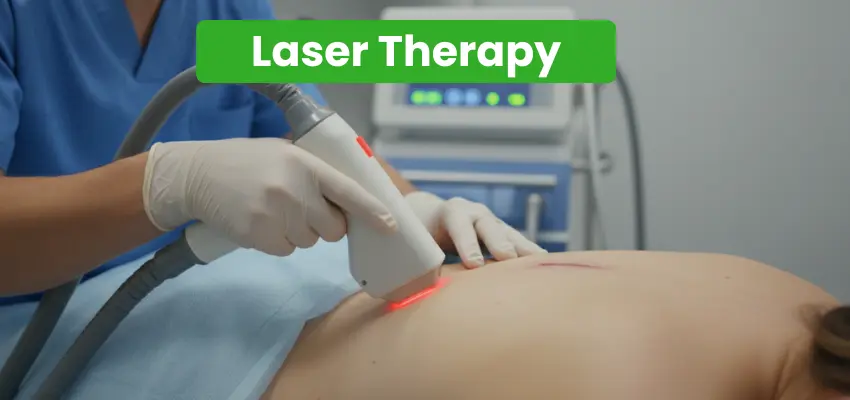

The term laser stands for light amplification by stimulated emission of radiation. Laser therapy utilises focused light beams to treat various medical conditions. Laser therapy is a medical treatment that uses a strong beam of light to cut, burn, or destroy tissues. This therapy is used for cosmetic-like skin and hair issues. It is also used for therapeutic and surgical purposes under medical supervision. It helps to destroy abnormal tissues ( kidney stones, cancer cells, tumours). .it can help to remove part of the prostate. This therapy helps to increase cell repair, boost blood vessels, and reduce inflammation.
What is Laser Therapy Used for?
Laser therapy is used across medicine for speeding up healing. It helps to improve mobility in conditions like arthritis and spinal injuries. It plays a role in reducing inflammation. While in surgeries like removing tumours. This can help treat eye issues. skin cosmetics like tattoo/ hair removal, or wrinkle reduction. It works to promote tissue repair and regeneration, delivering light energy to cells. It plays an important role in the aesthetic and therapeutic fields.
Laser therapy works through a process called Photobiomodulation, where light energy penetrates the skin and stimulates cellular activity. This interaction enhances energy production in Mitochondria, leading to faster healing and tissue repair.
How is Laser Therapy Done?
Laser therapy uses a handheld device to directly focus light energy into the target tissues. Laser therapy is used for Cellular activity of healing and pain relief. It can destroy abnormal cells, with the procedure varying from quick and painless. These low-level cold laser sessions are used for longer, more intensive surgical applications using endoscopes. It works directly on skin applications. All aimed at targeting biological responses like increased cell metabolism or sealing blood vessels.
Laser therapy is used to focus light to trigger a process called photobiomodulation. This process changes the condition of damaged tissues and increases recovery through cellular metabolism. These photons enter damaged tissues or skin and react with mitochondria. For better results, surgeons need to find the right light, reduce reflections, minimise unwanted absorption, and find the correct level of power.
Contraindications of Laser Treatment:
Laser treatment indications vary by procedure but generally include active infection, pacemakers, cancer, pregnancy, breastfeeding, photosensitising medications, history of keloid, autoimmune disease( lupus), uncontrolled diabetes, epilepsy, thyroid issues, and heart disease or hypertension.
These indications are listed with brief details:
- Eyes: This is the most valuable organ to laser damage, with injuries possible at a power level much lower than skin treatment.
- Skin: High-power lasers typically cause skin burning and skin injuries, ranging from mild to severe third-degree burns and charring.
- Pregnancy and Breastfeeding: Generally avoided due to harmful effects.
- Cancer: Active or current skin cancer or history of cancer in the treated area.
- Keloid: A history of forming keloid scars, and risk of stimulating excess scar tissue
- Epilepsy: Particular light-sensitive epilepsy. Flashes can trigger seizures.
- Infection: Active infection, cold sores (herpes simplex), and open wounds
- Photosensitivity: Conditions or medications causing extreme light sensitivity, like porphyria or some antibiotics/drugs.
- Autoimmune disease: Lupus, porphyria can be stimulated by light.
Benefits of Laser Therapy:
Laser treatments have made skin care much easier and more effective. They can help to resolve many common issues like fine lines, wrinkles, dark spots, and visible veins without any surgery. These treatments are gentle on the skin and still give more effective results. That’s why most people choose laser therapy to get bright and smooth skin.
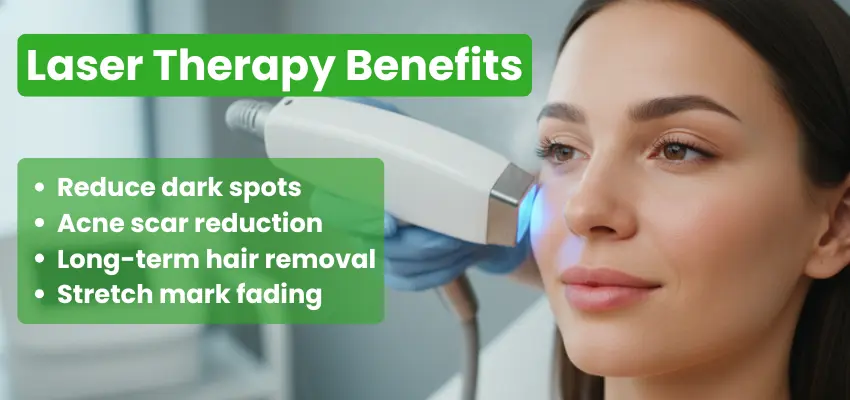
- Laser Therapy Benefits are below:
- Texture and Tone: Even skin tone, reducing dark spots, sun tan, and minimising open pores.
- Scars: It helps to reduce the acne scars, surgical scars, and stretch marks on the body.
- Pigmentation: Laser therapy helps to reduce birthmarks, pigmentation, and melasma.
- Hair Removal: Laser therapy is a long-term, exact solution for unnecessary hair.
- Vascular Issue: Laser can help to reduce the redness from rosacea, broken capillaries, and spider veins.
- Inflammation: It helps to reduce pain and inflammation
- Healing: Speed up the wound healing and new tissue regeneration.
Side Effects of Laser Therapy:
Laser therapy can cause temporary irritation. You may also have redness and swelling in the treated area. But these effects are minor and temporary. All irritation should disappear within hours of the treatment. You can try applying an ice pack to reduce or alleviate swelling and pain. You should call your doctor if you experience symptoms beyond the slight irritation or if the side effects aggravate. Laser treatment commonly observed these effects: dryness and skin sensitivity. On the other side, the effects may occur, but these are very rare, like hyperpigmentation, infection, burning on the skin, scars, and permanent loss of vision.
These symptoms can occur after Laser Therapy:
- Redness and swelling: After laser therapy, there may be minor redness on the treated area
- Dryness and exfoliation: Skin dryness occurs due to exfoliation
- Burning and itching: Mild sensation is common after treatment. You may feel some burning and itching effects
- Darkening spots: This laser may cause spots to darken and dull skin
- Pigmentations: It may cause hyperpigmentation or hypopigmentation
- Infections: Risk of bacterial, fungal, and viral infection, especially after laser, which may cause any skin infection
- Scaring and Burning: After laser, it may be very rare, but it can happen with too strong a setting or poor aftercare.
- Reactive Hair Growth: New, unwanted hair growth on the treated area.
- Eyes Issues: Glare, holes, night vision problems, or dry eyes.
How DO I Prepare for Laser Therapy:
To prepare for laser therapy, avoid sun exposure for one week. Before taking laser therapy, stop using skincare like retinol and other acids (3-7) days. Shave the area with cream without using any wax and pluck. Keep skin fresh and hydrated. Inform your dermatologist about medication and your history of cold sores to overcome complications. These steps help ensure safer and more effective results.
Precautions Before Laser Therapy:
- Sun Protection: Avoid direct sun exposure and skin tanning, use broad-spectrum sunscreen daily.
- Medications: Tell your doctor about your medical history and any medications or antibiotics like doxycycline or other photosensitising drugs. They may advise you to stop these medications.
- Antiviral: If you get cold sores, your doctor may prescribe an antiviral to start before treatment.
- Skin Care: Avoid retinoids, glycolic acids, and strong exfoliants
- Hair Removal: Stop waxing, plucking, or epilating.
Who Should Not Have Laser Therapy?
Laser therapy is not for everyone. The people who suffer from cancer, pacemakers, photosensitivity, certain autoimmune diseases and the lady who are pregnant women should normally avoid laser therapy. Especially over the treatment, due to risks like seizures, interference with devices, or harm to the fetus. Laser therapy involves direct eye exposure and is always very dangerous. It required protective eyewear.
What Happens After Laser Therapy?
After laser therapy, you can face some minor side effects like redness, itching, swelling, sensation, peeling, and new skin emerging as a healer over days to weeks. It requires gentle care, like moisturiser, and avoiding sunlight. For hair removal, hair sheds normally, revealing the treated area’s smooth skin over time as the treated hair follicles are gradually damaged.
Common effects are included:
- Reddish/Swelling: The treated area is mildly red and swollen and looks slightly pink, the same as a sunburn.
- Burning: A burning sensation can last for a few hours.
- Dryness and Itching: Skin may feel tight and rough.
- Hair Shading: Treated hair appears but sheds out as stubble within a week.
Is Laser Therapy Safe? (Clinical Safety Overview)
Include:
- FDA-approved uses
- Performed by certified dermatologists
- Controlled wavelength usage
What are the Types of Laser Treatment?
Laser treatment is a vast field, and it is treated with different methods. But it generally falls into some types. These types are treated with skin issues, scars, tattoos, vascular lesions, and tumours, using different wavelengths and wavelengths to remove skin.
Types of Laser Therapy are given below:
- Ablative Lasers (CO₂, Er:YAG)
- Non-Ablative Lasers (Nd: YAG, Pulsed Dye)
- IPL (Intense Pulsed Light – not a true laser)
Types of Laser Treatments for Skin, Hair & Pigmentation
- Ablative Laser: Remove outer skin layers (epidermis) and heat the dermis, creating remarkable resurfacing for deep wrinkles, scars, and sun damage. (CO₂,Er, YAG).
- Non-Ablative Lasers: Heat the dermis without damaging the outer skin layer, promoting collagen production for skin tightening and removing fine lines (pulsed dye, ND, YAG)
- Fractional Laser: It is created by microscopic treatment, leaving surrounding tissues intact for fast healing. It can be ablative (fractional, CO₂) or non-ablative, treating scars, texture, and wrinkles.
- Q-Switched Laser: Deliver high intensity, short pulses to break down pigments. This therapy is excellent for sun spots, tattoos, and melasma.
- IPL (Intense Pulsed Light): It uses broadband-spectrum light to reduce redness, improve spots, and remove hair, while stimulating collagen.
Conclusion: Is It Worth?
Laser therapy is a scientifically backed, minimally invasive solution used in dermatology, physiotherapy, and surgery. With proper consultation and professional supervision, it offers effective and long-lasting results for both medical and cosmetic concerns.
Frequently Asked Questions (FAQs)
Is laser Treatment painful?
Most treatments are painless or cause mild discomfort, depending on intensity.
How many sessions are required?
Typically, 3–6 sessions for visible results, depending on the condition.
Is laser therapy permanent?
Results like hair reduction are long-lasting but may need maintenance.
Can laser therapy damage skin?
When performed incorrectly, yes — but safe under professional supervision.
Who is a good candidate for laser therapy?
People with skin concerns, pain conditions, or cosmetic needs, after a medical evaluation.