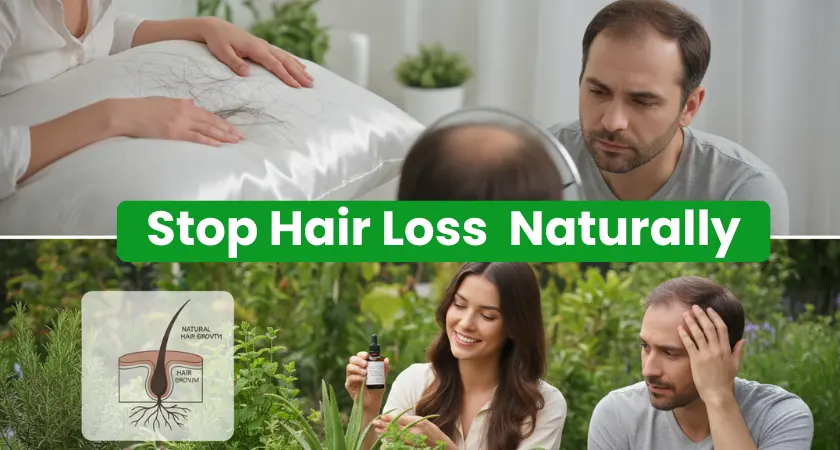

Hair loss is a common problem for men and women. Suppose you see your pillow or notice that your hair is getting thinner when you look in the mirror. This can really affect how you feel about yourself.
50 to 100 hairs fall every day; losing a lot of hair can be really worrying. The good thing is that hair loss can usually be controlled, and sometimes it can even be reversed. If you use home remedies, eat well and get help from a doctor when you need it you can have stronger hair. In this guide, we will tell you everything you need to know about hair loss. We will explain it in a way that’s easy to understand so you can learn about hair loss. Find ways to deal with it.
What Is Hair Loss?
Hair loss happens when the natural growth cycle of your hair is stopped. Normally, your hair grows, rests, and then sheds to make room for new strands. But when this cycle is imbalanced, then more hair starts falling out than growing back.
This can lead to thinning hair, gradual hairline loss, and even bald patches if left untreated.
Common causes of hair loss
Hair loss does not have just one cause; it is usually a blend of factors
- Genetics or a family history of balding can play a role.
- Hormonal changes can happen after pregnancy or due to thyroid problems.
- Poor diet short of essential nutrients
- Medical conditions like anemia
- Overuse of hair styling tools or chemical products
Why Does Hair Loss Happen?
Hair follicles need proper blood circulation and nutrients to stay healthy. When blood flow is decreased, follicles become weak, and hair growth slows down. Another major factor is a hormone called DHT (dihydrotestosterone), which can contract hair follicles gradually. This leads to thinner hair and suddenly stops new hair from growing. In addition to stress, lack of sleep, and unhealthy habits can increase hair shedding.
Traditional Treatments: Why They Don’t Always Work
Many people start with shampoos, oils, or over-the-counter products. While these may help for a short time but they often do not solve the root issue. Here are reasons why they may not deliver results
- They only treat symptoms, not the cause
- Your Results End When Your Routine Stops
- They show limited results in advanced hair loss cases
Therefore, a combined approach of natural and medical treatments is usually more beneficial.
Natural Treatments and Remedies
Natural treatments are a great starting point, especially in the early stages of hair loss. They are safe, affordable, and help to improve overall scalp health.
1. Essential Oils
Natural oils nourish the scalp and strengthen hair roots.
Coconut oil deeply penetrates the hair shaft and reduces protein loss, keeping hair strong and shiny.
Castor oil is rich in fatty acids and promotes densely packed look to hair over time.
Rosemary oil is known to improve blood circulation to the scalp, which can stimulate hair growth naturally.
2. Balanced Diet
Your hair reflects what you eat without proper nutrients; hair becomes weak and brittle.
Focus on
Proteins, which are the building blocks of hair, are found in eggs, chicken, and lentils
Iron prevents hair thinning, which is present in spinach and dates
Biotin and Zinc support growth and repair, which are found in nuts and seeds
3. Scalp Massage
A simple daily scalp massage can make a big difference. It improves blood circulation and strengthens hair roots. Helps nutrients reach follicles more effectively
4. Stress Management
Stress is one of the most ignored causes of hair loss. It can boost hair into the shedding phase before its time. Helpful habits can reduce this problem, which include
- You need regular exercise
- Meditation and deep breathing
- You should sleep for 7 to 8 hours
5. Herbal Remedies
- Natural ingredients can relieve scalp and support regrowth
- Aloe vera reduces scalp irritation and dandruff
- Onion juice contains sulfur, which may boost collagen production
- Natural green tea hair wash provides antioxidants that support hair follicles
Advanced Treatment Options
Non Surgical Treatments
- PRP Platelet-Rich Plasma Therapy Uses your own blood to stimulate hair growth
- Laser therapy improves follicle activity
- Medications help control hair fall and support regrowth
Surgical Treatments
FUE hair treatment involves transplanting the follicles of the person for natural results
FUT hair treatment: It is a strip method for covering larger areas
How Diagnosis Is Done
Before starting treatment, proper analysis is essential. Specialists check
- Your scalp condition
- Hair density and pattern
- Medical history
- Nutritions deficiency
How the Treatment Process Works
1. Initial consultation and scalp analysis
2. Identifying root causes
3. Personalized treatment plan
4. Combination of therapies (natural + medical)
5. Regular follow-ups for progress monitoring
How the Patient Should Prepare
Eat a balanced diet
Avoid harsh chemical products
Stay hydrated
Follow the guidance of your doctor
Recovery and Aftercare
After starting treatment:
- Be regular in your routine
- Avoid excessive heat hair styling
- Keep your scalp clean
- Attend follow-up visits
Good aftercare improves results notably
When Will You See Results?
Hair regrowth needs patience
4–6 weeks: Less hair fall
3–4 months: Noticeable improvement
6–12 months: Strong and visible regrowth
Who Is a Good Candidate?
- People with early-stage hair loss
- Individuals with thinning of hair
- Those who are looking for natural solutions
- Healthy individuals who can follow a routine
Benefits of Natural and Medical Treatments
A properly organized treatment strategy offers many benefits, like
- Stronger and thicker hair
- Healthier scalp
- Improved appearance and confidence
- Long-lasting and natural results
- Safe and effective solutions
Side Effects (If Any)
- Natural remedies are usually safe but may cause mild irritation in sensitive individuals.
- Medical treatments may have minor side effects, so always consult a professional
Is Hair Regrowth Permanent?
Hair regrowth can last long if you:
Maintain a healthy lifestyle
Continue proper hair care
Address the root cause
Consistency is the main thing that can provide long-lasting results
Recovery Time
Natural remedies provide gradual improvement
Non-surgical treatments can take a little or no downtime
Hair transplant mostly takes 1 to 2 weeks for recovery and full results in months
Types of Treatments Used
Natural remedies
PRP therapy
Laser therapy
Medications
Hair transplant
Cost and Availability
PRP Treatment cost
Hair PRP cost in Pakistan normally ranges between PKR 10000 and PKR 25000, but Dot Clinics offers budget-friendly prices starting from PKR 8300. The final price is determined by the expertise of the doctor and the intensity of the treatment.
FUE hair transplant cost
Mild (receding hairline) 3000 grafts cost PKR 70000 to PKR 120000
Moderate (thinning crown) 3500 grafts cost PKR 75000 to PKR 125000
Advanced (large bald area) 4000 grafts cost PKR 80000 to PKR 130000
Severe (Norwood 5-6) 4500 grafts cost PKR 85000 to PKR 130000
Severe (Norwood 6-7) 5000 grafts cost PKR 90000 to PKR 140000
FUT hair transplant Cost
FUT hair transplant costs in Pakistan typically range between PKR 80,000 and PKR 180,000, making it generally more affordable than FUE.
At Dot Clinics, the average cost of a hair transplant in Pakistan ranges from Rs. 70,000 to Rs. 110,000 for patients requiring between 2,000 and 4,000 grafts.
Final Thoughts
Hair loss can feel overwhelming, but with the right approach, it is manageable and often reversible. A combination of natural remedies, medical treatments, and lifestyle improvements can help to restore healthy hair growth.
At Dot Clinics, we provide a professional and personalized care-focused environment with experienced and highly qualified staff. Our team uses advanced techniques and personalized treatment plans to deliver safe, effective and authentic results. We also ensure that every patient receives the highest standard of care.
FAQs
1. Can hair grow back naturally?
Yes, with proper care, nutrition, and scalp care, natural regrowth is possible, especially in the early stages.
2. How long does it take to stop hair fall?
You may notice reduced hair fall within 4 to 6 weeks with consistent treatment.
3. Which oil is best for hair regrowth?
Coconut oil, castor oil, and rosemary oil are highly effective.
4. Is PRP better than natural remedies?
PRP provides faster and more targeted results while natural remedies support long-term health.
5. Can stress cause permanent hair loss?
Usually, stress-related hair loss is reversible once stress is managed.
6. Is a hair transplant safe?
Yes, when performed by qualified professionals, it is a safe and effective solution.
7. What is the best treatment for hair loss?
A combination of treatments according to your condition works best.