

Erectile dysfunction (ED) in young men is generally overlooked. But many people think it is purely psychological. One of the most overlooked physical causes of it is venous leak which is also known as venogenic erectile dysfunction. This condition can even affect men when they are 20 or 30 years old.
In this blog, we will explain what venous leak is and explore the real causes behind it at a young age. This helps patients better understand when to seek treatment.
What is Venous Leak?
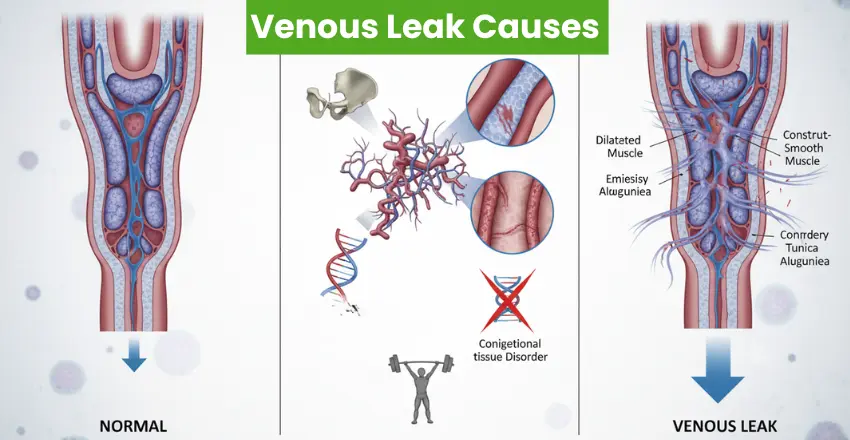
Venous leak occurs when the veins in the penis fail to trap blood properly during an erection. Commonly blood flows into the penis and is maintained to ensure firmness. However in venous leak blood escapes very quickly and makes it difficult to sustain an erection.
In a typical erection, the corpora cavernosa arteries in your penis deliver blood to erectile tissues. The tunica albuginea which is a strong fibrous covering helps to trap blood within the erectile tissues by compressing the veins. Issues with the tunica albuginea and other issues result in reduced vein constriction which can lead to venous leakage.
What are the Symptoms of a Venous Leak?
Its symptoms are similar to general erectile dysfunction but has some specific patterns:
- Difficulty in maintaining an erection
- Erections that soften quickly after forming
- Position-dependent erections
- Decreased morning erections
- Emotional effects like stress, anxiety and frustration
Why Does Venous Leak Occur in Young Men?
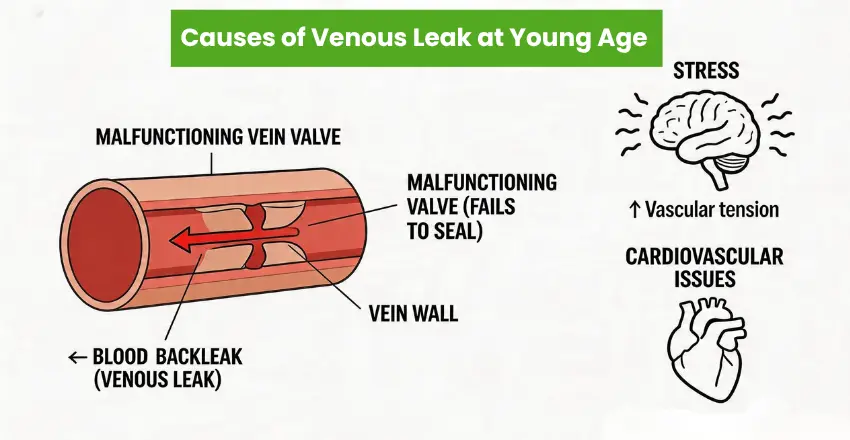
Venous leak is not just a condition that is caused by aging. Many younger patients experience it due to basic physical or functional issues. Given below are some of the most common causes:
Congenital Weakness
Some men are born with naturally weak venous valves or structural differences. This affects blood retention and may appear early in adulthood without any clear trigger.
Vascular Disorders
Healthy blood flow is essential for maintaining erections. Conditions like early atherosclerosis, high cholesterol and poor blood circulation affect your retention.
Diabetes Conditions
Unstable diabetes can damage your blood vessels and nerves even in younger individuals. This weakens the mechanism that maintains erections.
Pelvic or Penile Injury
Physical injuries from sports, accidents or surgeries can damage the blood vessels which are responsible for erections leading to long-term issues.
Peyronie’s Disease
Scar tissue inside the penis (Peyronies Disease) can reduce blood flow which cause curved or painful erections and contributing to venous leakage.
Nerve Disorders
Erections depend on proper nerve signaling. Damages due to injury or spinal conditions can disturb this process.
Hormonal Imbalances
Hormones like testosterone play a key role in sexual function and erection quality. Their imbalance can lead to reduced libido and weaker erections that contribute to venous leak in some cases.
Psychological Factors
Stress, anxiety and performance pressure can mimic or worsen symptoms in younger men especially.
Lifestyle Factors
Smoking, poor diet, lack of exercise and obesity damage blood vessels over time and increase the risk of erectile problems.
When Should You See a Doctor?
If you are under 40 and experience:
- Erections that fade quickly
- Poor response to medicines
- Ongoing difficulty in maintaining firmness
It is important to consult your specialist. Early diagnosis can help to identify causes that can prevent from worsening conditions.
Risk Factors for Venous Leak
Certain factors increase the chances of venous leak:
- Cardiovascular disease or diabetes
- Excessive body weight
- Smoking or nicotine use
- Chronic stress
- Aging
- Certain medications (for blood pressure or depression)
Managing these factors early can help protect sexual health.
How Venous Leak Is Diagnosed
Doctors use a combination of evaluations to confirm the condition:
Medical History
Understanding symptoms like lifestyle and health conditions help to identify possible causes.
Physical Examination
A simple exam checks for structural issues like Peyronie’s disease.
Ultrasound Scan
This test evaluates blood flow and detects problems with inflow or outflow.
Cavernosography Test
It is a specialized imaging test that identifies where leakage occurs.
Nocturnal Penile Tumescence Test
This monitors natural erections during sleep to differentiate between physical and psychological causes.
Blood Tests
These are used to check hormone levels, cholesterol and blood sugar.
Venous Leak Treatment Options
Venous leak is not always permanent. Treatment depends on the cause and severity.
Lifestyle Changes
Healthy habits can improve blood vessel function such as.
Regular exercise
Balanced diet
Quitting smoking
Limiting alcohol
Oral Medications
Drugs like sildenafil or tadalafil increase blood flow. However, they may be less effective in severe cases since they do not stop blood from leaking out.
Vacuum Devices
These devices draw blood into the penis and use a ring to maintain the erection. They are non-invasive but temporary solutions.
Surgical Options
A prosthesis that allows controlled erections. Usually considered as last option.
A minimally invasive procedure that blocks leaking veins to improve blood retention.
Venous Ligation
A surgical method to tie off leaking veins and is used in selected cases.
Hormone Therapy
If your testosterone level is low then this treatment can help to improve sexual function and energy levels.
Counseling & Support
Mental health support can help manage stress, anxiety and performance pressure.
How to Help Prevent Venous Leak
It can not always be prevented but certain habits can reduce its risks:
Stay Active
Regular exercise improves blood circulation and strengthens blood vessels. Pelvic floor exercises may also help.
Eat a Healthy Diet
Focus on whole-day foods like fruits, vegetables, grains, nuts and lean protein. Avoid processed foods and excessive sugar.
Quit Smoking
Smoking damages blood vessels and reduces blood flow.
Limit Alcohol
Using excessive alcohol can affect hormones and circulation.
Manage Health Conditions
Control diabetes, blood pressure and cholesterol to prevent vascular damage.
Reduce Stress
Techniques like mindfulness, breathing exercises and relaxation can improve overall health and blood flow.
Final Thoughts
Venous leak at a young age is more common than many realize and it is treatable. The key is identifying the root cause whether it is vascular, hormonal or psychological.
At Dot Clinics, we focus on accurate diagnosis and advanced non-surgical treatments to help patients regain confidence and improve their sexual health.
Frequently Asked Questions
Is venous leak common in young men?
Yes, venous leak can occur in younger men. It is especially common in those with underlying vascular or congenital issues.
Can venous leak be cured?
It depends on the cause. Many cases improve with treatment and lifestyle changes.
Is venous leak permanent?
Not always. Some cases are reversible, especially when they are caused by lifestyle or psychological factors.
How is venous leak diagnosed?
Doctors use tests like Doppler ultrasound to evaluate blood flow and confirm the condition.
Can stress cause venous leak?
Stress does not directly cause structural venous leak but can mimic or worsen symptoms by affecting erection quality.