
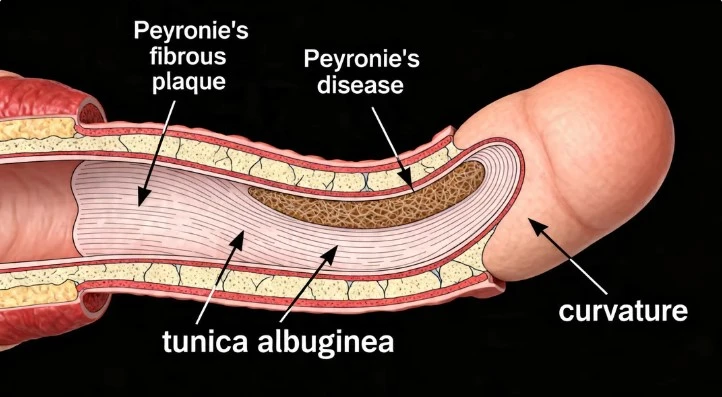

Peyronies Disease is a condition where scar tissue forms inside the penis. The penis can. Curve when it gets erect because of this scar tissue. This can be painful. Cause problems when you have sex. The reason people get Peyronie disease is not always clear. It is often related to an injury or inflammation inside the penis.
The way to treat Peyronie disease depends on how bad the condition’s. Doctors can give you medicine, therapy or, in some cases surgery. You should see your doctor regularly to make sure you are getting the care. When you know what causes Peyronie disease what the symptoms are and what your treatment options are you can manage the condition better. Also help your partner understand what is going on during treatment.
Causes of Peyronie’s Disease
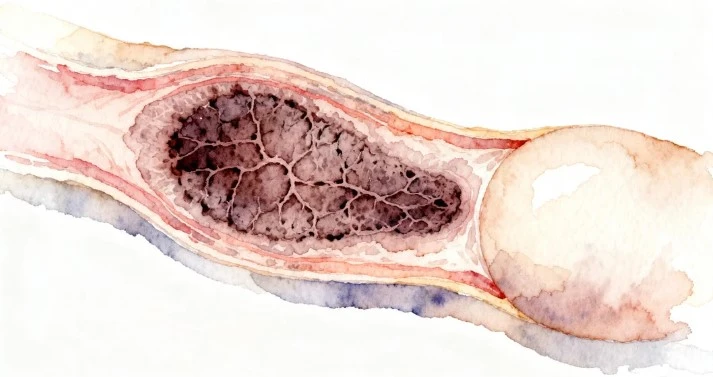
The exact cause of this disease in not yet known but it is believed that it happens due to small injuries inside the penis that do not heal properly. These may include:
Injury or trauma
A direct injury during sex or physical activity may cause internal damage.
Repeated stress
Small repeated injuries over time can also lead to scar tissue.
Genetics
Some people may be more likely to develop this condition due to family history.
Inflammation
Swelling or inflammation inside the penis may lead to plaque formation.
Age
It is more common in middle-aged and older men.
Other conditions
Conditions like Dupuytren’s contracture (hand finger bending disease) are linked with higher risk.
Poor healing
Sometimes the body heals in an unusual way and forms too much scar tissue.
Connective tissue problems
Disorders affecting body tissues may increase risk.
Poor blood flow
Reduced blood flow can affect healing and increase chance of scar formation.
Signs and Symptoms of Peyronie’s Disease
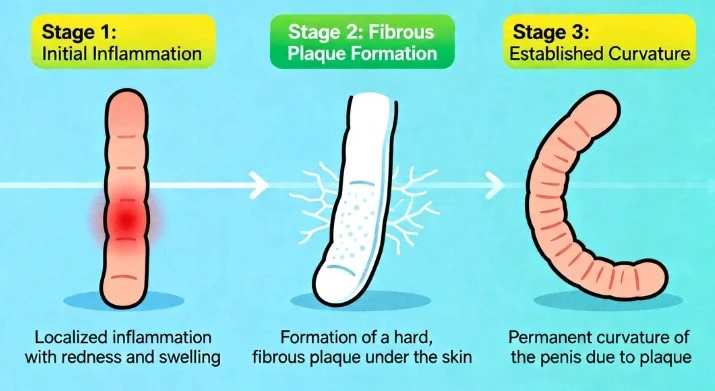
Some symptoms of Peyronie’s Disease range from simple to complex. Some common signs are
- The penis may bend and curve when it becomes erect
- Pain during an erection and during sexual activity
- Small hard lumps or thickened areas in the penis
- The penis may look shorter than before
- A narrowed shape or “hourglass” appearance of the penis
- Trouble in having and maintaining sexual activity
In more serious cases a person may also experience erectile dysfunction which means difficulty getting and keeping an erection.
Diagnosis of Peyronie’s Disease
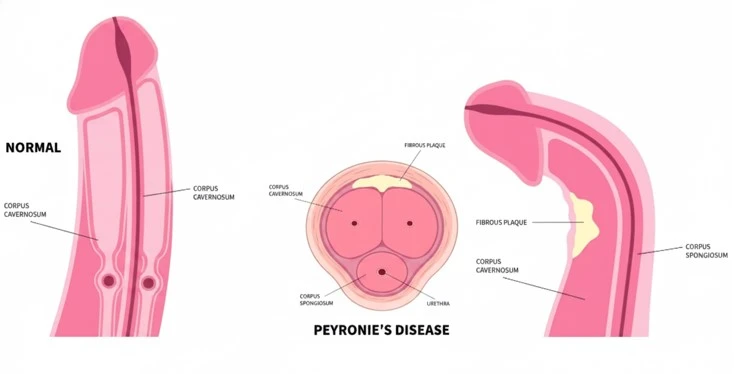
Doctors diagnose Peyronie’s disease using a few simple steps
1. Medical history
The doctor will ask when your symptoms started and whether you have had any injuries and health problems in the past.
2. Physical examination
The doctor will gently check the penis for any hard lumps, pain and unusual bending.
3. Imaging tests
Tests like an ultrasound or MRI may be done to look for scar tissue inside the penis.
4. Blood tests
These tests help find other possible health issues such as diabetes and hormone imbalance.
5. Blood flow tests
A Doppler ultrasound may be used to check how well blood is flowing in the penis.
Treatment and Management
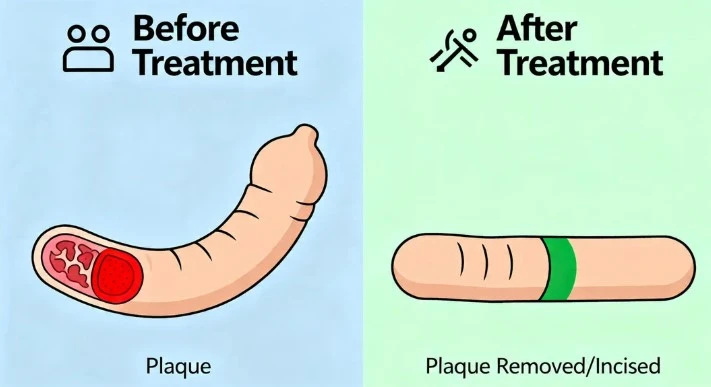
There are different treatment options depending on the severity:
Medicines
Some medicines can help reduce scar tissue and remove symptoms. Examples include pentoxifylline and collagenase injections.
Injections
Some drugs can be injected directly into the scar tissue to soften it and reduce curvature.
Physical therapy
Use devices like penile traction or vacuum pumps may help improve shape and maintain length.
Shockwave therapy
Low intensity shockwave therapy may help break down scar tissue and improve symptoms in some cases.
Xiaflex Injection
Xiaflex (collagenase clostridium histolyticum) is the first and only FDA-approved non-surgical treatment for Peyronie’s disease, designed for men with a palpable plaque and a penile curvature. It uses enzymes to break down the scar tissue (collagen) causing the curve, typically reducing curvature when combined with, penile modeling.
Surgery
In extreme cases surgery may be needed. Options include removing and cutting the scar tissue or placing a penile implant.
Counseling and support
This condition can affect confidence and mental health. Counselling can help reduce stress, anxiety and emotional pressure.
Healthy Lifestyle Changes for Better Health
Good habits can support overall healing
- Take complete diet
- Regular exercise
- Avoid smoking
- Limit alcohol use
When to See a Doctor for Peyronie’s Disease
If you feel pain bending in penis or difficulty during sex it is important to see a urologist early. Early treatment can help prevent the condition from getting worse.
Conclusion
Peyronie’s disease can be worrying but It is treatable. With the diagnosis and treatment of Peyronie’s Disease many men improve their symptoms and quality of life. If you notice any signs of Peyronie’s Disease do not delay advice. Early care gives results and helps manage Peyronie’s Disease more effectively.
FAQs
What causes Peyronie disease?
It is usually caused by small injuries inside the penis that heal in a wrong way. Inflammation and genetics may also play a role.
What are typical symptoms?
Common symptom like curved penis, pain during erection, and difficulty during sexual activity.
When to comsult doctor?
You should see a doctor if you feel pain bending in penis or problems during sex. Early treatment is helpful.
Can it affect fertility?
It usually does not affect fertility directly but it can make sexual intercourse difficult.
Is surgery always needed?
No surgery is only needed in serious condition when other treatments do not work.