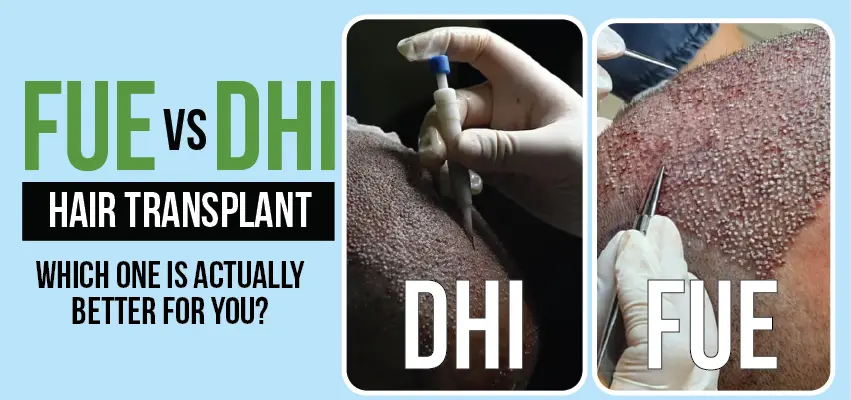

Hair loss hits differently. It’s not just about appearance; it affects confidence, social presence, and even how you see yourself in the mirror. That’s why procedures like FUE and DHI hair transplants have become so popular in Pakistan, especially in cities like Multan, Lahore, and Karachi.
But here’s the problem: most people don’t really understand the difference between these two techniques. Clinics throw around terms like “advanced,” “painless,” or “latest technology,” but what does that actually mean for you?
Let’s break it down properly, no fluff, no confusion, just clear, expert-level insight so you can make the right decision.
What Is a Hair Transplant?
Before comparing techniques, it helps to understand the foundation.
A hair transplant is a surgical procedure where hair follicles are taken from a donor area (usually the back of your scalp) and implanted into areas with thinning or no hair. These transplanted hairs are resistant to hair loss, which is why results are typically permanent.
Two of the most widely used modern methods are:
Both are minimally invasive and far more advanced than older strip methods (FUT). But they differ in how the hair is implanted, and that difference matters more than you think.
FUE Hair Transplant
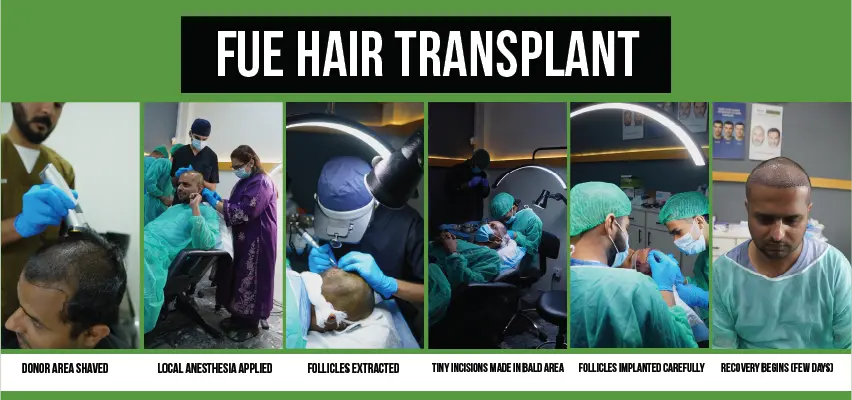
A Follicular Unit Extraction (FUE) hair transplant is a minimally invasive procedure that permanently restores hair by individually moving healthy follicles from a donor area (usually the back of the head) to thinning/bald areas.
How FUE Works
FUE is the most commonly performed hair transplant technique worldwide.
Here’s the simplified process:
- Individual hair follicles are extracted one by one from the donor area using a micro-punch tool.
- Tiny incisions (channels) are created in the recipient area.
- Extracted grafts are then implanted into those channels.
That’s it. Simple, effective, and widely trusted.
Why FUE Is So Popular in Pakistan
FUE has become the go-to option for most clinics in Pakistan—and for good reason:
- Works well for large bald areas
- More affordable compared to DHI
- Proven track record with consistent results
- Suitable for most hair types
For patients dealing with advanced hair loss (Norwood scale 4–7), FUE often makes more sense.
Pros of FUE
- Covers large areas efficiently
- Lower cost per graft
- Widely available (almost every clinic offers it)
- Natural-looking results when done correctly
Cons of FUE
- Slightly longer healing time
- Less control over hair angle and direction compared to DHI
- Requires shaving the donor area
DHI Hair Transplant
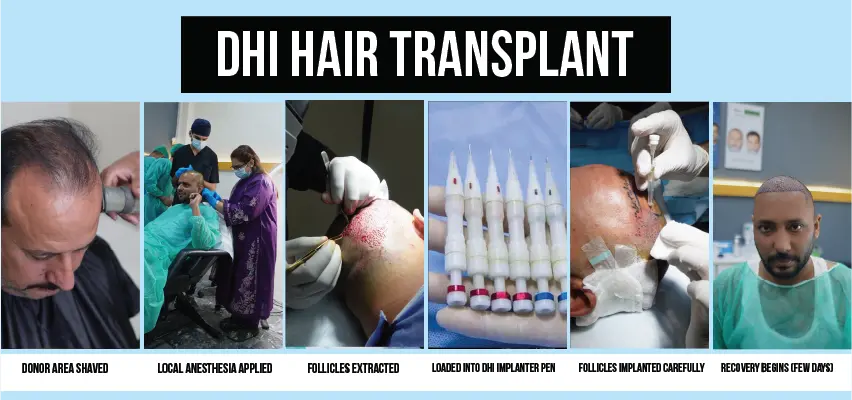
Direct Hair Implantation (DHI) is an advanced, minimally invasive hair transplant technique developed by the DHI Global Medical Group. It is a specialized form of Follicular Unit Extraction (FUE) in which hair follicles are extracted from a donor area and implanted directly into the recipient area using a pen-shaped tool known as the Choi Implanter Pen.
How DHI Works
DHI is essentially an advanced version of FUE, but with a key difference in the implantation process. Instead of creating channels first, DHI uses a special tool called a Choi Implanter Pen.
Process:
- Hair follicles are extracted (same as FUE)
- Each follicle is loaded into the implanter pen
- The surgeon directly implants the hair into the scalp—no pre-made incisions
This allows for greater precision, especially in areas like the hairline.
Why DHI Is Considered “Advanced”
DHI gives the surgeon more control over:
- Angle
- Depth
- Direction
That translates into more natural-looking density, especially in visible areas.
Pros of DHI
- Higher precision in hair placement
- Better density for smaller areas
- Minimal bleeding and trauma
- Faster recovery in many cases
- No need to fully shave the head (in some cases)
Cons of DHI
- More expensive
- Takes longer per session
- Not ideal for very large bald areas
- Requires highly skilled surgeons
FUE vs DHI: Side-by-Side Comparison
Here’s a clear comparison so you can instantly understand the differences:
| Feature | FUE | DHI |
| Technique | Extraction + channel creation + implantation | Extraction + direct implantation |
| Tool Used | Micro punch + forceps | Choi Implanter Pen |
| Precision | Good | Very high |
| Ideal For | Large bald areas | Hairline & density work |
| Cost in Pakistan | Lower | Higher |
| Recovery Time | Moderate | Faster |
| Shaving Required | Yes | Sometimes no |
| Session Duration | Shorter | Longer |
Which One Looks More Natural?
This is the question most people actually care about.
Here’s the honest answer:
- DHI gives slightly more natural results, especially in the hairline
- But a well-performed FUE can look just as natural
The real factor is not the method—it’s the surgeon’s skill.
A poorly done DHI will look worse than a well-executed FUE. Always remember that.
Cost Comparison in Pakistan (2026 Updated Insight)
Prices vary depending on the clinic, surgeon experience, and number of grafts, but here’s a realistic range:
FUE Cost
- PKR 70,000 – PKR 180,000
- Cost per graft: PKR 30 – 70
DHI Cost
- PKR 120,000 – PKR 300,000+
- Cost per graft: PKR 60 – 120
DHI is more expensive because:
- It takes more time
- Requires specialized tools
- Needs highly trained staff
Which Technique Is Better for You?
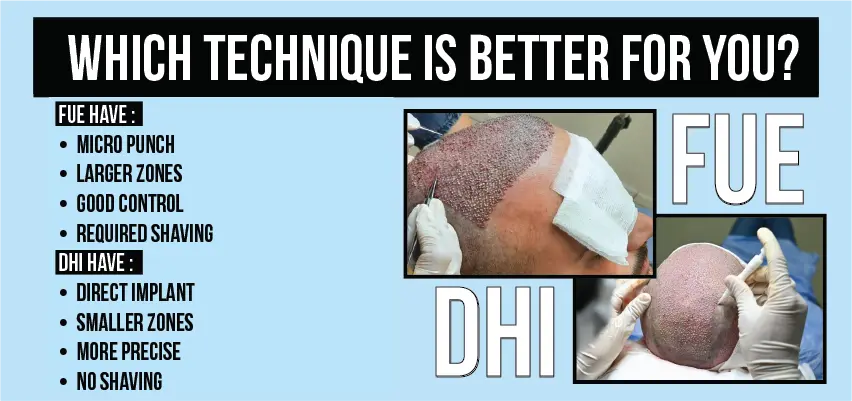
Let’s make this practical.
Choose FUE if:
- You have significant baldness
- You want maximum coverage
- You’re on a budget
- You don’t mind shaving your head
Choose DHI if:
- You want to refine your hairline
- You need high density in small areas
- You prefer minimal downtime
- Budget is not your main concern
Common Myths About FUE and DHI
“DHI is completely different from FUE.”
Not really. DHI is actually built on FUE extraction—it just changes the implantation step.
“DHI always gives better results.”
Not always. It depends on:
- Surgeon experience
- Hair quality
- Number of grafts
“FUE results look fake.”
Outdated myth. Modern FUE—when done correctly—looks completely natural.
“Hair transplant is painful.”
This is one of the most common myths about hair restoration. In reality, both FUE and DHI procedures are performed under local anesthesia, which means you won’t feel actual pain during the surgery. Some patients may experience slight discomfort during the initial numbing process, but it only lasts a few seconds. Once the scalp is fully numb, the rest of the procedure is generally painless. If you’re still concerned about what the procedure feels like, understanding whether a hair transplant is painful can help you set realistic expectations and feel more confident before undergoing treatment.
Recovery & Aftercare: What to Expect
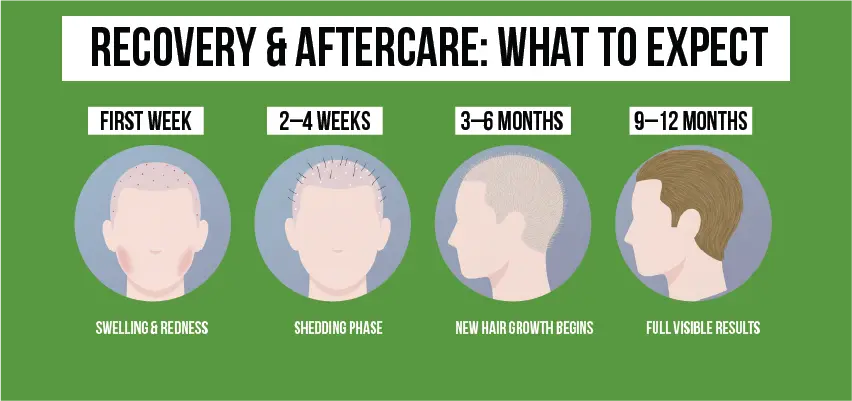
First Week
- Mild swelling and redness
- Scabs form around transplanted follicles
2–4 Weeks
- Shedding phase (this is normal)
3–6 Months
- New hair growth begins
9–12 Months
- Full visible results
Pro Tip (Most Clinics Won’t Tell You)
Your results depend heavily on:
- Post-procedure care
- Avoiding sweat and sun exposure
- Proper washing technique
Neglect these, and even the best transplant can underperform.
Are Results Permanent?
Yes, with one condition.
The transplanted hair comes from a donor area resistant to hair loss. However:
- Your existing hair can still fall out
- You may need PRP therapy or medication to maintain overall density
FUE vs DHI for Beard & Eyebrows
Interesting use case:
- DHI is often preferred for beard and eyebrow transplants
- Why? Because it offers better angle control, which is critical in these areas
Risks and Side Effects
Both procedures are generally safe, but possible risks include:
- Infection (rare)
- Shock loss (temporary)
- Uneven density
- Poor hair direction (if done incorrectly)
Again, it all comes down to the clinic and the surgeon’s expertise.
Why Clinic Choice Matters More Than Technique
This is where most people go wrong.
They obsess over FUE vs DHI… but ignore:
- Surgeon experience
- Hygiene standards
- Technology used
- Patient reviews
A top-tier clinic using FUE can outperform an average clinic using DHI.
What Happens During a Consultation?
A good clinic will:
- Analyze your scalp and donor area
- Determine graft requirement
- Recommend the right technique (not upsell the expensive one)
- Show real patient results
If a clinic pushes DHI without analysis, that’s a red flag.
Final Thoughts: FUE vs DHI Isn’t a Competition
Let’s simplify everything:
- FUE = Coverage + affordability
- DHI = Precision + density
Neither is “better” universally. The best choice depends on your hair loss pattern, goals, and budget.
Conclusion
FUE and DHI hair transplant techniques have transformed how hair restoration is done in Pakistan. Both rely on extracting healthy follicles and redistributing them—but they differ in implantation precision, cost, and ideal use cases.
FUE remains the backbone of large-scale hair restoration due to its efficiency and affordability. DHI, on the other hand, has carved out a niche for high-density, detail-focused work—especially around the hairline and facial areas.
Looking ahead, we’re already seeing hybrid approaches where clinics combine FUE extraction with DHI implantation, offering the best of both worlds. This trend is likely to dominate advanced hair restoration practices in the coming years.
What Should You Do Next?
If you’re seriously considering a hair transplant:
- Book a professional consultation
- Get a personalized graft estimate
- Ask which technique suits your specific case—not what’s trending
👉 Want a deeper breakdown of costs, recovery, and results in Pakistan?
Explore more detailed guides on DotClinics.pk or book a consultation with a certified specialist to get started.