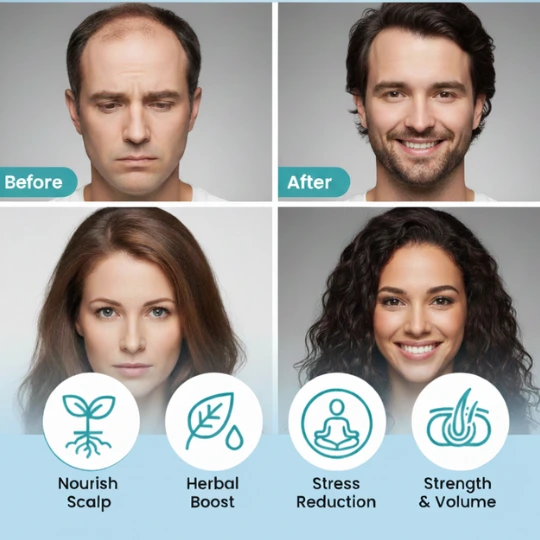
Hair Loss Treatment
Surgical and Non-Surgical Treatments for Hair Loss in Lahore & MultanHair loss is a popular problem that impacts both men and women. While daily hair fall is normal excessive shedding can lead to noticeable thinning and bald areas impacting confidence. The good news is that a variety of treatments are available today, from medical solutions to therapies. At Dot Clinic, we provide clinically proven treatments customized to each person helping to restore healthy natural-looking hair growth.
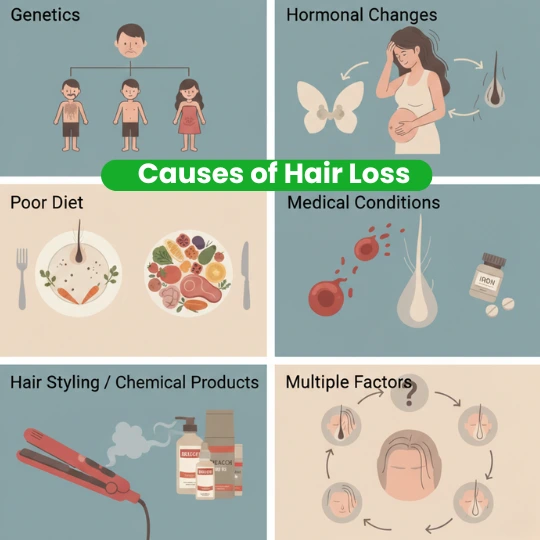
What Are The Hair Loss Causes And Risk Factors?
Hair loss or alopecia is a common problem often caused by genetics, hormonal changes or other factors. Early diagnosis is important as treatments work best on active follicles. Hair loss can appear as a receding hairline, thinning crown, patchy areas or weak hair. Common Causes of Hair Loss:
- Androgenetic Alopecia: The most common cause of hair loss, often inherited. It leads to gradual thinning of hair and can eventually result in baldness.
- Hormonal Changes: Conditions like thyroid imbalance, pregnancy, or menopause can disrupt the natural hair growth cycle.
- Stress-Related Hair Loss: Physical or emotional stress can trigger temporary hair shedding (telogen effluvium).
- Nutritional Deficiencies: A lack of iron, protein, and essential vitamins can weaken hair and slow down its growth.
- Medical Conditions: Certain illnesses, medications, and treatments (such as chemotherapy) may contribute to hair loss.
- Scalp Issues: Infections, dandruff, and poor scalp health can damage hair follicles and affect healthy hair growth.
How Common Is Hair Loss?
Hair loss is often ignored as many people think it is just a part of aging. However, early treatment can make a big difference in results. It is not only about looks but hair loss can also affect confidence. Some important things to know:
- 50% of men experience hair loss by age 50
- 40% of women have noticeable hair thinning by age 50
- Alopecia areata affects about 2% of people at some point
- Over 1 billion people worldwide experience some form of hair loss
Hair Loss Patterns in Men vs Women
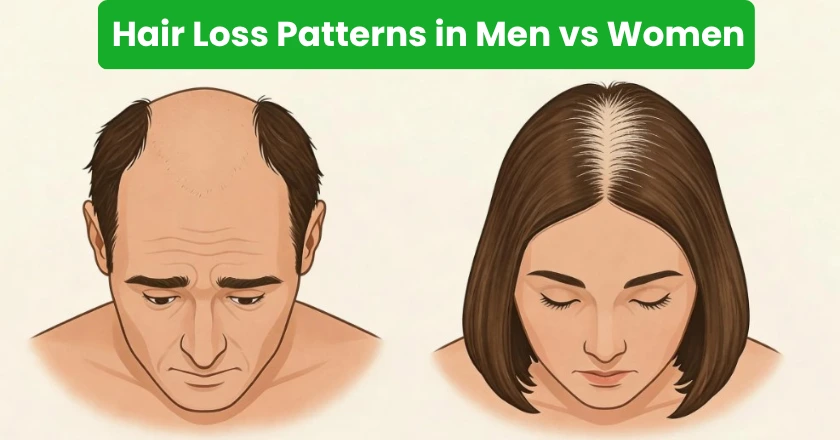
- Men: The most common cause is male pattern baldness, triggered by sensitivity to the hormone DHT. Hair on the top and front gradually becomes weaker and finer, eventually stopping growth. While hair on the sides and back usually remains healthy, this creates a U-shaped pattern. Treatments vary depending on the stage of hair loss.
- Women: Female pattern hair loss is often linked to genetics, hormones, and age. Women typically experience overall hair thinning rather than distinct bald patches. Early diagnosis is important, as some cases may be due to underlying medical conditions requiring prompt treatment.
Men vs Women Key Differences
| Factor | Men | Women |
|---|---|---|
| Main Cause | Male pattern baldness (androgenetic alopecia) | Genetics, hormones, and aging |
| Hormonal Impact | Highly affected by DHT (dihydrotestosterone) | Less sensitive to DHT |
| Hair Loss Pattern | Receding hairline and crown thinning (M/U shape) | Diffuse thinning across the scalp |
| Hairline | Recedes over time | Usually remains intact |
| Bald Areas | Common in advanced stages | Rare, mostly thinning |
| Progression | Can lead to partial or complete baldness | Gradual thinning, rarely complete baldness |
| Affected Areas | Temples and crown | Top and central scalp |
| Severity Risk | Higher risk of complete baldness | Lower risk, mostly thinning |
Non-Surgical Hair Loss Treatments
Our non-surgical treatments are perfect for those in the initial stages of hair loss. They strengthen hair follicles improve scalp health and slow down thinning. These treatments help maintain your hair regrowth support. Options include:
PRP Therapy
(Platelet-Rich Plasma)PRP is one of the most popular non-surgical hair treatments. Uses your own blood to stimulate natural hair growth making hair thicker. Best for early thinning caused by stress or hormonal changes.
Exosome Therapy for Hair Loss
A cutting-edge treatment that delivers growth signals to hair follicles. Faster and more potent than PRP, it repairs cells and improves scalp health for both men and women.
Mesotherapy for Hair
Vitamins, minerals and amino acids are injected into the scalp to strengthen follicles, boost blood flow and support weak hair roots. Often combined with PRP for better results.
Microneedling (Derma Roller)
Tiny scalp injuries stimulate collagen production and improve absorption of treatments like PRP, enhancing scalp health and hair support.
Medications for Hair Loss
Doctors may recommend FDA approved medications such as Minoxidil (topical solution) and Finasteride (oral medication for men). These help to slow down your hair loss and preserve your natural hair.
Not sure which treatment is right for you?
Talk to our experts for a customized solution. Call us +923290011336
Combination Treatments (Best Results Approach)
For excellent results treatments are often combined to target multiple causes of hair loss:
- PRP + Mesotherapy: Enhances nourishment and follicle stimulation
- PRP + Microneedling: Improves absorption and boosts collagen production
- Medications + PRP: Slows hair loss while promoting regrowth
Surgical Hair Loss Treatment
Hair transplantation is the most effective and permanent solution for hair restoration. At Dot Clinics, our highly experienced surgeons perform advanced techniques like FUE, FUT, and DHI.
FUE Hair Transplant
(Follicular Unit Extraction)PRP is one of the most popular non-surgical hair treatments. Uses your own blood to stimulate natural hair growth making hair thicker. Best for early thinning caused by stress or hormonal changes.
FUT Method
Follicular Unit TransplantationFUT surgery is performed for the removal of strip of scalp and hair follicles are relocated to the areas that needs the follicles. This is a cheap method and recommended for large section of hair loss.
DHI Hair Transplant
(Direct Hair Implantation)A version of FUE using a specialized pen for implantation. It has higher precision, better density and no need for incisions. A long-lasting solution with a single procedure and excellent success rates.
Our Hair Fall Treatment Process
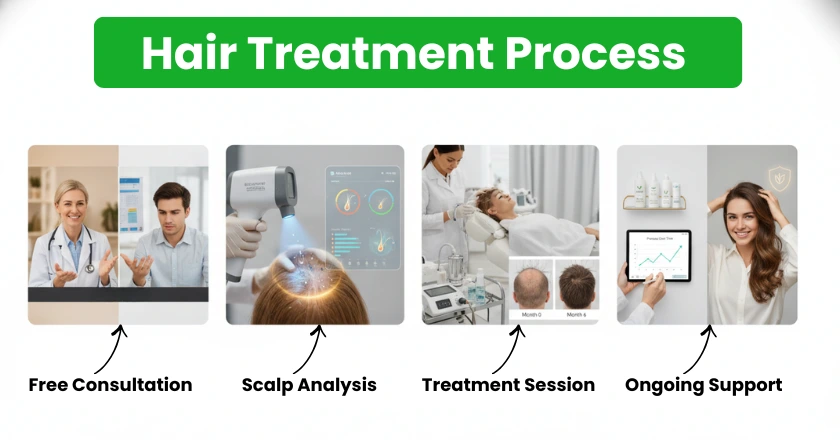
- Free Consultation: Your journey starts with a consultation. Our medical team will discuss your concerns, review your hair history, and examine your scalp to understand the root cause. You can choose an online consultation or visit the clinic, depending on your convenience.
- Scalp Analysis: We assess scalp health, follicle activity, and hair density to determine the most suitable treatments. Based on this evaluation, a personalized treatment plan is created, whether it involves a single therapy or a combined approach.
- Treatment Sessions: Essential vitamins, minerals, and nutrients are delivered directly into the scalp to nourish weakened follicles and improve overall hair quality.
- Monitoring & Adjustments: Hair loss treatment is an ongoing process, not a one-time visit. Your progress is carefully monitored, and treatment plans are adjusted based on your hair and scalp response.
- Ongoing Support & Maintenance: To maintain results, our team provides guidance on follow-up sessions, supportive care, and long-term scalp health, helping you protect and strengthen your hair over time.
Pre and Post Treatment Instructions
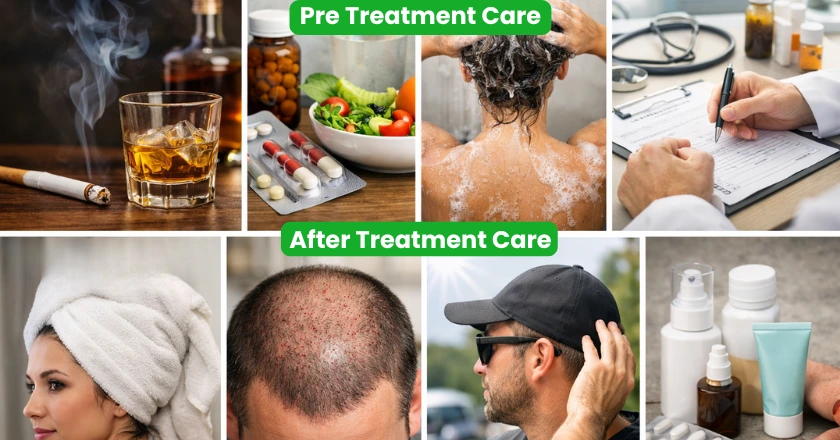
| Pre-Treatment Instructions | Post-Treatment Care |
|---|---|
|
|
Recovery Timeline
- First Few Days: Mild redness or sensitivity may occur
- 1–2 Weeks: Scalp starts healing and normal routine resumes
- 1–3 Months: Temporary shedding may occur (normal phase)
- 3–6 Months: Visible hair growth begins
Benefits of Hair Loss Treatment
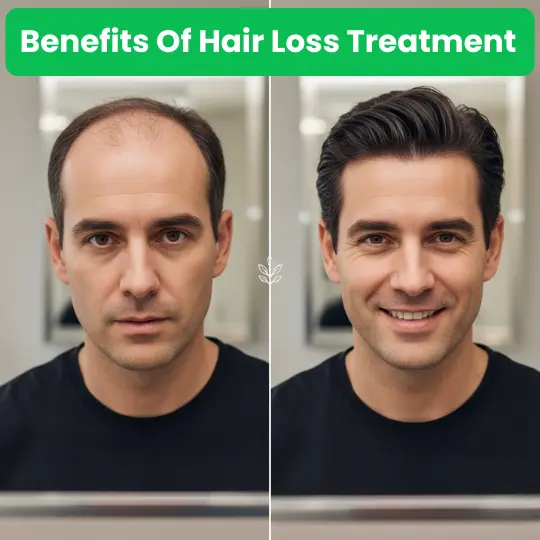
- Stops Hair Loss Progression: Slows or prevents further hair thinning and shedding.
- Stimulates Hair Regrowth: Activates weak or dormant follicles to promote new growth.
- Improves Hair Density: Makes hair fuller, stronger, and healthier-looking.
- Restores Hairline: Especially with surgical treatments like FUE and DHI.
- Enhances Scalp Health: Improves circulation and reduces inflammation.
- Non-Surgical Options Available: Safe, minimally invasive treatments with little downtime.
- Long-Term Results: Can be sustained with proper care and maintenance.
- Boosts Confidence: Improves appearance and self-confidence.
Side Effects & Risks
- Temporary redness or swelling
- Mild discomfort or sensitivity
- Temporary hair shedding after treatment
- Slight itching during healing
- These effects are usually short-term and resolve within a few days
Who is Candidate For Hair Loss Or Not?
| Who is a Good Candidate for Hair Loss Treatment | Who May Not Be Suitable |
|---|---|
|
|
Results & What to Expect
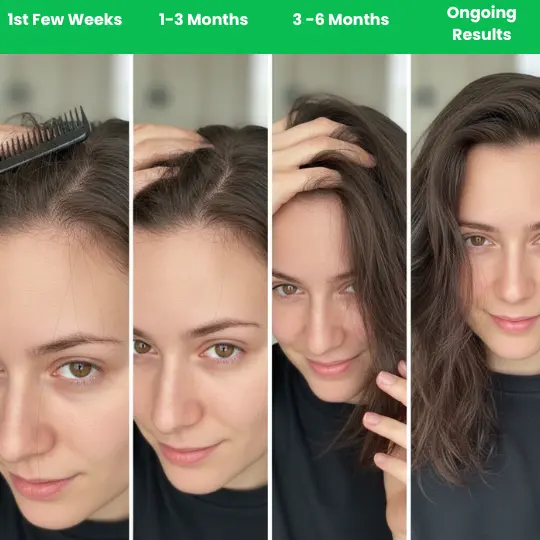
- 1st Few Weeks: You may notice reduced shedding and improved scalp comfort as treatments begin supporting follicle health.
- 1–3 Months: Hair feels stronger and healthier. Early signs of regrowth or thickening may appear, especially in areas with active follicles.
- 3–6 Months: Visible improvement in density and overall hair quality becomes more noticeable. Hair loss progression often slows significantly.
- Ongoing Results: With maintenance sessions and proper care, results can be sustained long-term and help delay further hair thinning.
Before & After Results
- Reduced hair fall within a few weeks
- Gradual increase in hair thickness and density
- Improved hairline and overall coverage
- Healthier, stronger hair growth
Hair Loss Cost in Pakistan
Hair loss treatment costs depend on the treatment chosen and the number of sessions. At Dot Clinics, we offer affordable customized packages.
- PRP Treatment Cost: PRP cost in Pakistan usually ranges from PKR 10,000 to PKR 25,000. At Dot Clinics, prices start from PKR 8,300 depending on doctor expertise, equipment, and treatment intensity.
- Exosome Therapy: PKR 40,000 to 120,000+ per session. Cost varies depending on the brand and protocol used, typically ranging between PKR 45,000 to PKR 75,000.
- Mesotherapy: One session costs around PKR 8,300 at Dot Clinics. Final pricing is shared after consultation.
- Botox Treatment: PKR 25,000 to PKR 65,000 depending on brand, treatment area, and number of units required.
- Hair Transplant: Average cost in Pakistan ranges from PKR 70,000 to PKR 110,000 for 2,000–4,000 grafts. Final cost depends on individual hair loss condition.
Contact us now for exact pricing based on your condition.
Why Patients Choose Our Clinic?
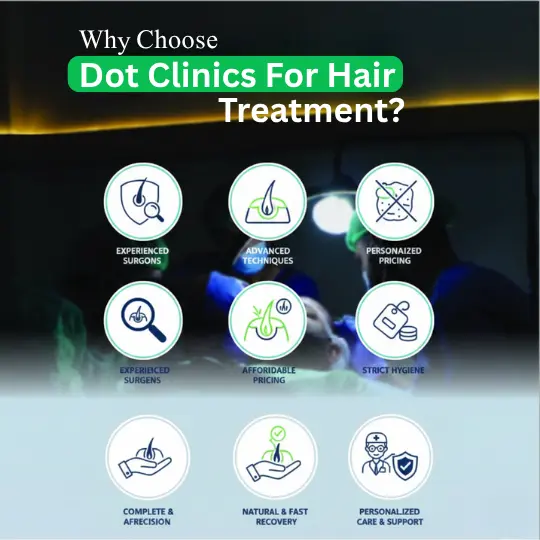
- Experienced Surgeons: 10+ years of experience in advanced hair restoration procedures.
- Advanced Techniques: We use FUE, DHI, and Sapphire FUE for natural and effective results.
- Affordable Pricing Packages: Cost-effective treatment plans tailored to different budgets.
- Personalized Treatment Plans: Customized solutions based on your hair loss condition and goals.
- Strict Hygiene & Medical Standards: International-level sterilization and safety protocols.
- Complete Aftercare Support: Continuous follow-up and guidance for long-term results.
Join hundreds of satisfied patients who have successfully restored their hair with us.
HAIR TRANSPLANT FAQ's
It depends on the stage of hair loss. PRP and Exosomes are best for early-stage hair loss, while hair transplant is ideal for advanced baldness.
Yes, transplanted hair is permanent. It is taken from DHT-resistant areas and continues to grow naturally for a lifetime.
Yes, non-surgical treatments are highly effective in early stages. They strengthen existing hair, improve density, and slow down hair loss.
Usually 3 to 4 initial sessions are recommended, followed by maintenance sessions depending on your condition and response.
Non-surgical treatments have no downtime. Hair transplant may require a few days of recovery depending on the technique used.
Hair loss can begin in late teens for men and in the 20s–30s for women. Some conditions like telogen effluvium or alopecia areata can occur at any age.
Yes, many types of hair loss can be slowed or partially reversed. Early treatment increases the chances of regrowth and better results.
At Dot Clinics, we perform a detailed consultation including scalp analysis, hair density assessment, and medical history review to create a personalized treatment plan.
Non-surgical treatments usually show results in 3–6 months. Hair transplant results become visible after 6–12 months, with full results in 12–18 months.
Yes, maintenance is important. A combination of follow-ups, lifestyle management, and supportive treatments helps preserve long-term results.

Dr. Ayesha Malik
Dermatologist & Aesthetic Physician
The content of this page is for informational purposes only.
Please consult with our Dermatologist for diagnosis and treatment.
Meet Our Medical Providers



Our Contacts
-
LAHORE: 85-R1, Johar Town, Phase 2.
MULTAN: 2nd Floor Ali Imran Center, Opposite UBL, Abdali Road.
Get Lahore Directions
Get Multan Directions -
Lahore: 0327-0011336 , 0329-0011336
Multan: 0332-1133577, 0327-0011335
(24/7 General inquiry) - info@dotclinics.pk
Why DotClinics?
Highly qualified medical team, latest treatments with state of the art technology to fix your skin, hair & body issues.
Patient centric clinic.