

Varicocele is condition where the veins inside the scrotum get bigger because the blood does not flow properly. This varicocele condition is quite common in men. Normally varicocele is not a problem. Sometimes varicocele can cause some discomfort. Varicocele can also affect the fertility of the male.
A lot of men do not know that they have varicocele until they go to the doctor for a check up. Learning what is varicocele and how varicocele is diagnosed is very important. This is so that men can get help and have peace of mind about their varicocele.
A Quick Overview of Varicocele
It appears when tiny valves inside the scrotal veins stop working properly.It makes blood stay in the veins instead of flowing normally which causes them to swell. This problem usually happens on the left side of the scrotum because of the way blood flows in that area.
Many men have varicocele and never face any problem. But for some it can cause pressure and affect fertility. Getting the right diagnosis helps doctors to decide if treatment is needed or not.
Why Diagnosis is Important
Early examination can avoid problems in the future. Although not every varicocele needs medical check up but in some cases it may affect sperm production and cause discomfort over time.
Men who are trying to achieve pregnancy commonly discover varicocele during fertility analysis.Recognizing the condition early allows doctors to guide you with the best possible treatment plan.
Signs That May Need Medical Attention
Varicocele does not always cause symptoms but some men may notice certain changes, such as.
- A dull aching pain in the scrotum
- A feeling of heaviness especially after standing for long hours
- Enlarged or twisted veins often described as a bag of worms
- One testicle appears smaller than the other
- Difficulty with fertility
If any of these signs appear it is better to consult a doctor.
Step-by-Step Process of Diagnosis
Clinical Examination by a Doctor
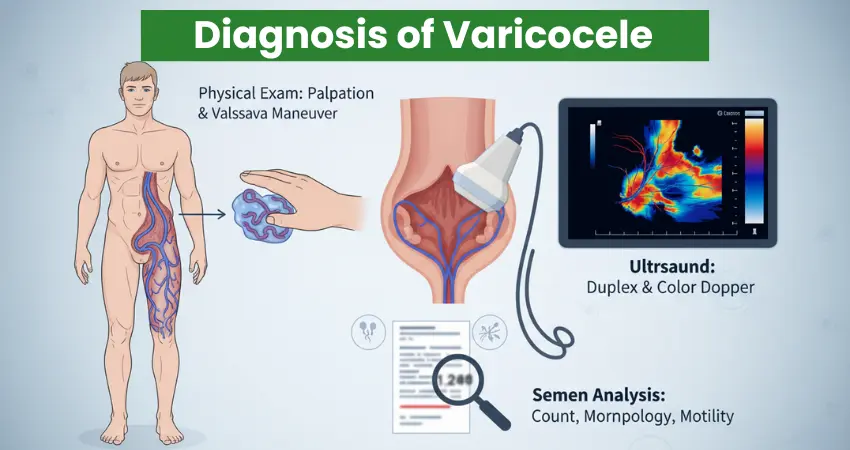
The first step in diagnosing varicocele is a physical checkup. The doctor examines the scrotum while the patient is standing and lying down. In some cases the patient is asked to perform a simple action called the Valsalva maneuver means holding breath and pushing slightly which makes the veins more visible.
This basic exam often helps identify moderate to severe cases.
Imaging for Clear Confirmation
When the physical exam is not enough doctors use imaging tests to confirm the diagnosis.
Scrotal Ultrasound
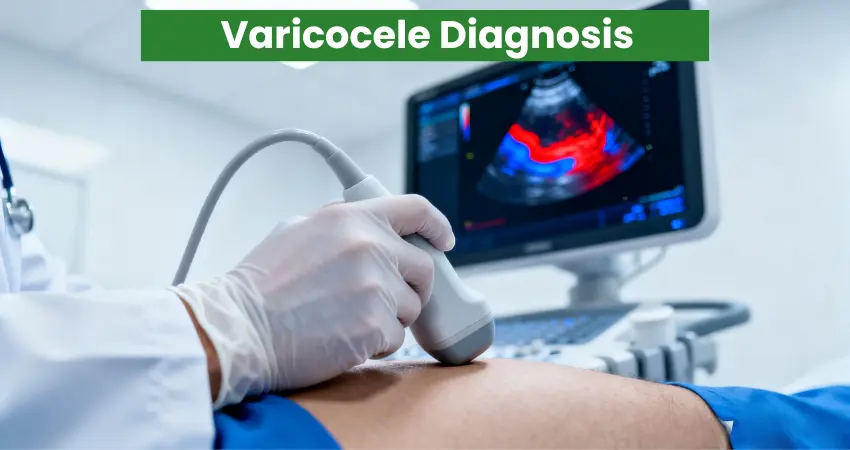
This is a painless and safe test that uses sound waves to create images of the scrotum. It helps detect enlarged veins and gives a clear view of their size.
Doppler Ultrasound
This test goes a step further by showing that how blood moves inside the veins. It can identify abnormal and backward blood flow which is a key sign of varicocele.
Fertility Testing
If a man is facing difficulty in having children doctors may recommend a Semen Analysis. This test evaluates sperm count, movement and overall quality. It helps determine whether varicocele is affecting reproductive health.
Understanding Severity Levels
Doctors often classify varicocele into different grades depending on how noticeable it is.
Mild Grade 1
Only detected during strain
Moderate Grade 2
Felt during examination
Severe Grade 3
Clearly visible through the skin
This grading system helps decide whether monitoring or treatment is needed.
When to Visit a Specialist
It is important to seek medical advice if you experience.
- Ongoing pain in the scrotum
- Visible swelling or enlarged veins
- Trouble with fertility
- Noticeable change in testicle size
Timely consultation ensures proper evaluation and avoids complications later.
Can Varicocele Go Undetected?
Yes mild cases may not be easily noticed especially without symptoms. That is why imaging tests play an important role in confirming the diagnosis. Many men only discover varicocele during routine or fertility-related check-ups.
Final Thoughts
Diagnosing varicocele is really easy and simple. It usually involves a doctor checking you out and doing some ultrasound tests on you. Varicocele does not always need to be treated. It is a good idea to find out if you have varicocele early on. This helps you avoid problems that can last a time.
If you notice something strange happening to your body or you are worried, about varicocele and how it might affect your fertility you should go see a doctor. Getting checked for varicocele is always a good idea. Its best non-surgical treatment is varicocele embolization and surgial treatment is varicocelectomy.
FAQs
1. Is diagnosis of varicocele painfull?
No the process is generally not painful. Physical exams and ultrasounds are quick and painless.
2. Can a doctor diagnose varicocele without ultrasound?
Yes in many cases a physical examination is enough. However ultrasound provides more accurate confirmation.
3. How much time does the diagnosis take?
It usually takes one visit. Ultrasound tests may take around 15 to 30 minutes.
4. Is varicocele always visible?
No mild cases are not visible and only be detected during examination or imaging tests.
5. Does varicocele always affect fertility?
Not always. Many men with varicocele have normal fertility but in some cases it can impact sperm quality.